

WATCH: The Sad Elephant In The Room: The Psychological Toll Of Captivity
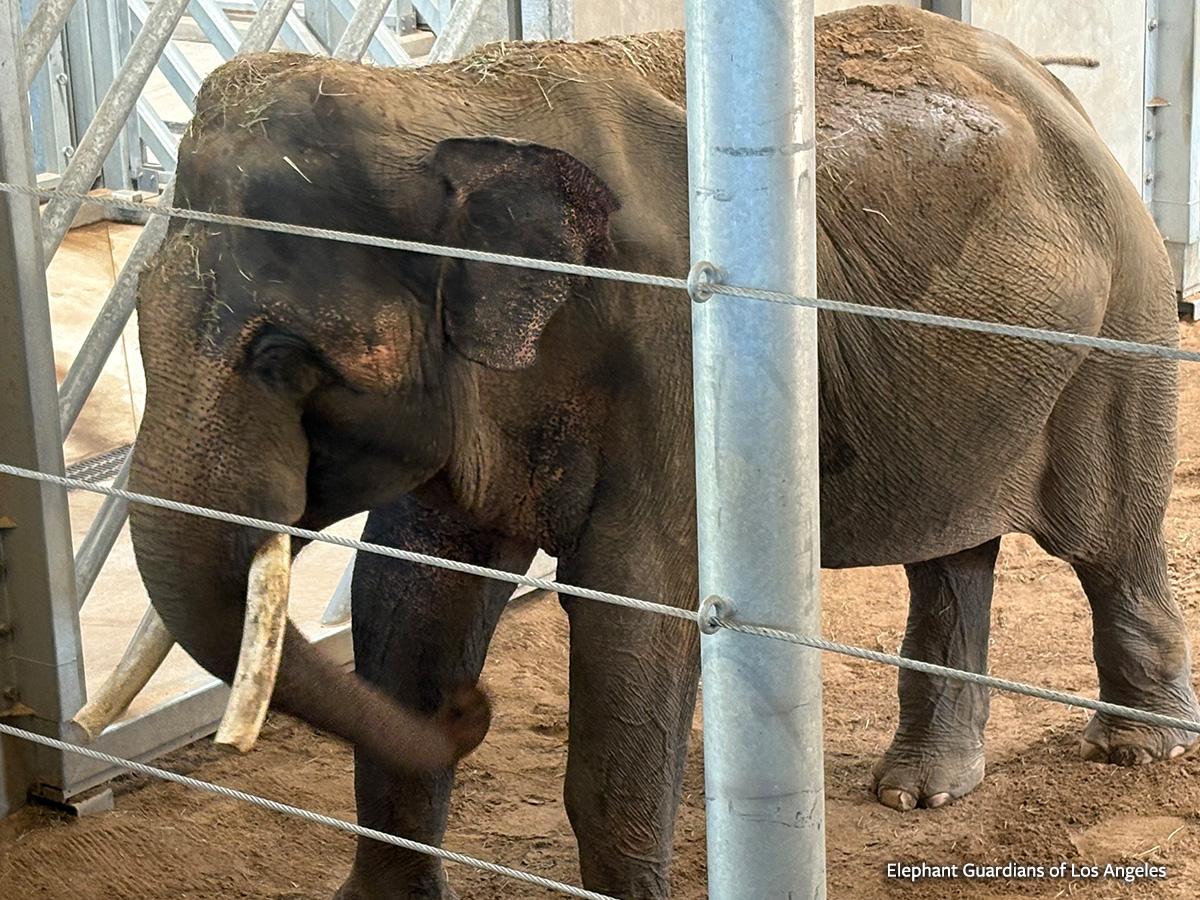
One day at the Oregon Zoo, as Packy paced endlessly in his small yard, a two-year-old girl looked up at her mother and said, “That elephant is sad.” It took the eyes of a child to recognize what most adults have been conditioned not to see.
Every day, zoo visitors watch elephants sway, bob, and pace in repetitive patterns. Many assume the animals are “dancing.” Zoo staff claims they are eagerly anticipating food or attention from keepers. But elephant experts confirm these behaviors are never seen in the wild. They are symptoms of profound psychological distress caused by captivity.
As Dame Daphne Sheldrick, co-founder of the Sheldrick Wildlife Trust in Kenya, once said, “What you see in a zoo is not an elephant, but a tragedy.”
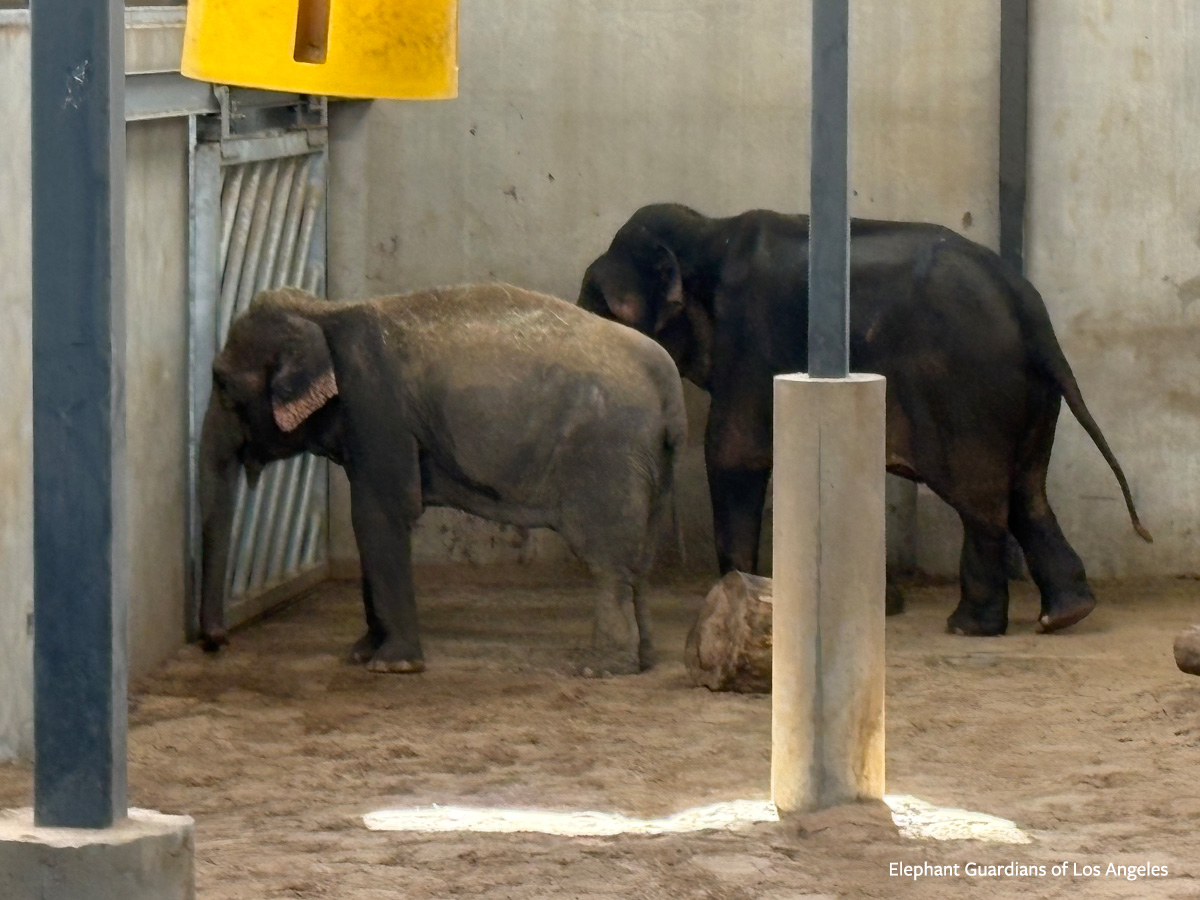
Elephants, trapped in a bleak environment, Tulsa Zoo
The tragedy is compounded by the fact that these zoochotic behaviors are a sign of brain damage. Studies show that prolonged captivity can physically alter the brain, thinning the cerebral cortex responsible for higher cognitive function. Reduced blood flow deprives the brain of oxygen-rich circulation essential for healthy neurological function. Captive elephant minds and bodies deteriorate faster than they do in nature. Zoo elephants are often considered “geriatric” in their 30s — long before wild elephants would be nearing old age.
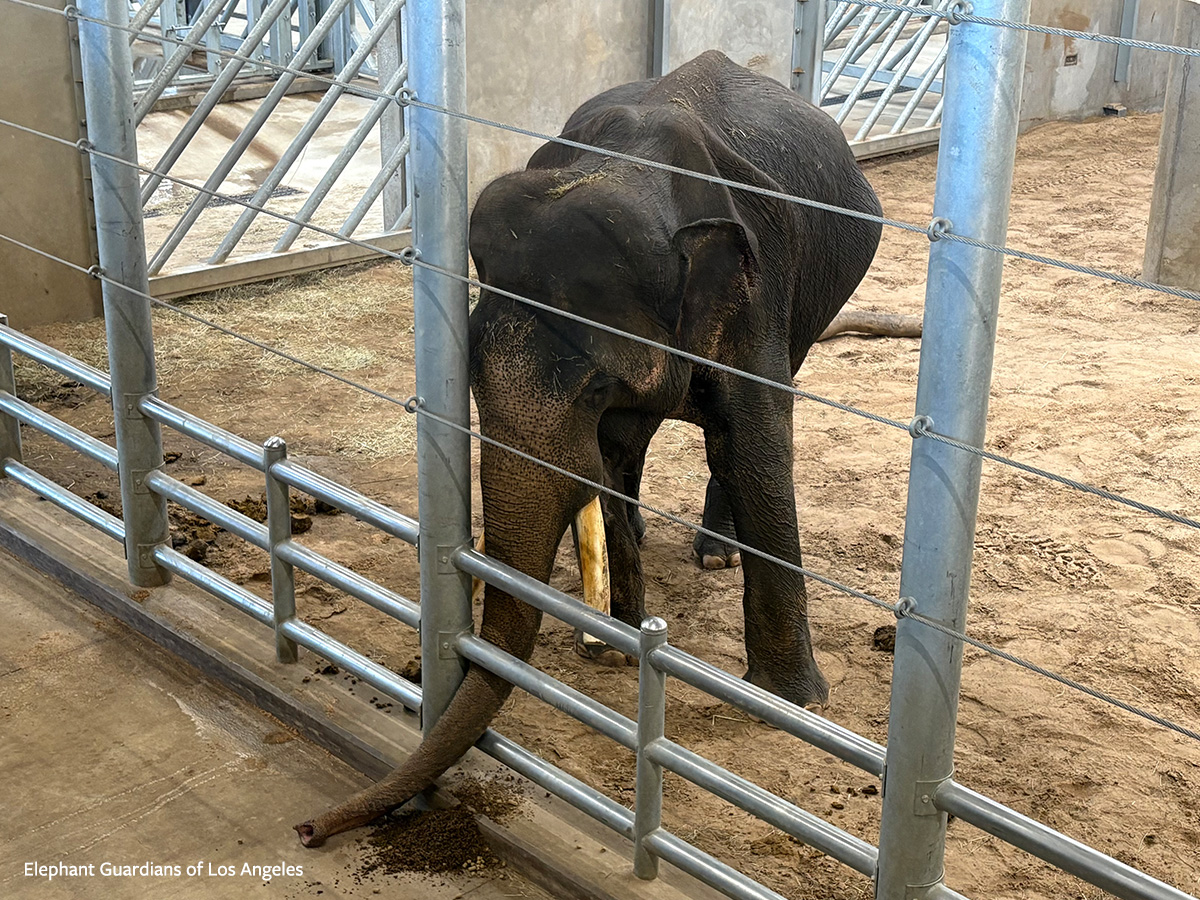
Elephant scrounging for food, Tulsa Zoo
A court case could change everything.
Now, in South Africa, a landmark court case is forcing the world to confront the psychological suffering endured by captive elephants. The court will decide whether the emotional and mental harm inflicted on elephants is sufficient reason to release them from the Johannesburg Zoo to a conservation park.
If successful, the case could change the future for three elephants, Lammie, Ramadiba, and Mopane, and potentially reshape how captive elephants are treated worldwide. Once people truly see the suffering, it becomes impossible to ignore the moral question at the center of elephant captivity.
Charley’s story proves freedom is possible.
In 2024, after 40 years in captivity, first in a circus for 16 years, then alone for decades at the Pretoria Zoo in South Africa, an elephant named Charley was finally released back into the wild. Renamed Duma, he experienced freedom for the first time since being captured as a two-year-old calf. His release demonstrated that even after decades behind bars, elephants can still reclaim pieces of the life nature intended for them.
Elephants are uniquely unsuited to captivity.
Elephants’ immense intelligence, emotional depth, massive physical needs, and lifelong social bonds cannot be replicated inside zoo enclosures. No amount of enrichment, exhibit expansion, or public relations messaging can change that fundamental truth.
The growing effort to expose the suffering of captive elephants, now even in courtrooms, may mark the beginning of a long-overdue shift away from confining elephants in zoos and toward relocating them to true sanctuaries, or wherever possible, back to the wild landscapes where they truly belong: the savannas of Africa and the forests of Asia.
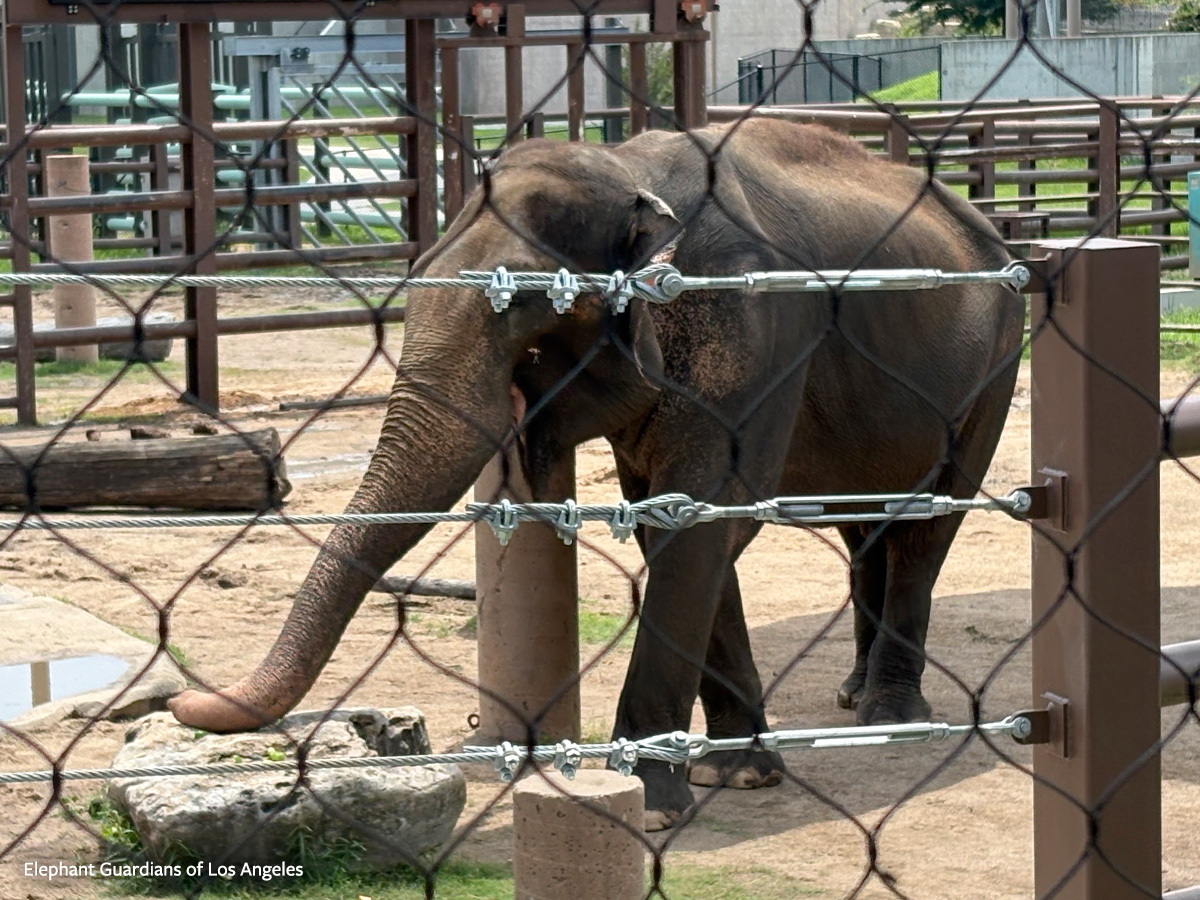
Sneezy, in his prison yard, Tulsa Zoo
Take action today for the Tulsa Zoo elephants.


