

Illinois Rodeos Are Breaking the Law: Tell Officials to Prosecute Animal Abusers
This alert is no longer active, but here for reference. Animals still need your help.
There is profound harm to animals at every rodeo, but even with solid evidence of violations of animal cruelty laws at Mexican-style rodeos held in Illinois, officials aren't taking this issue seriously, and few individuals have been charged. Tell officials to uphold the law and hold those caught hurting animals accountable!
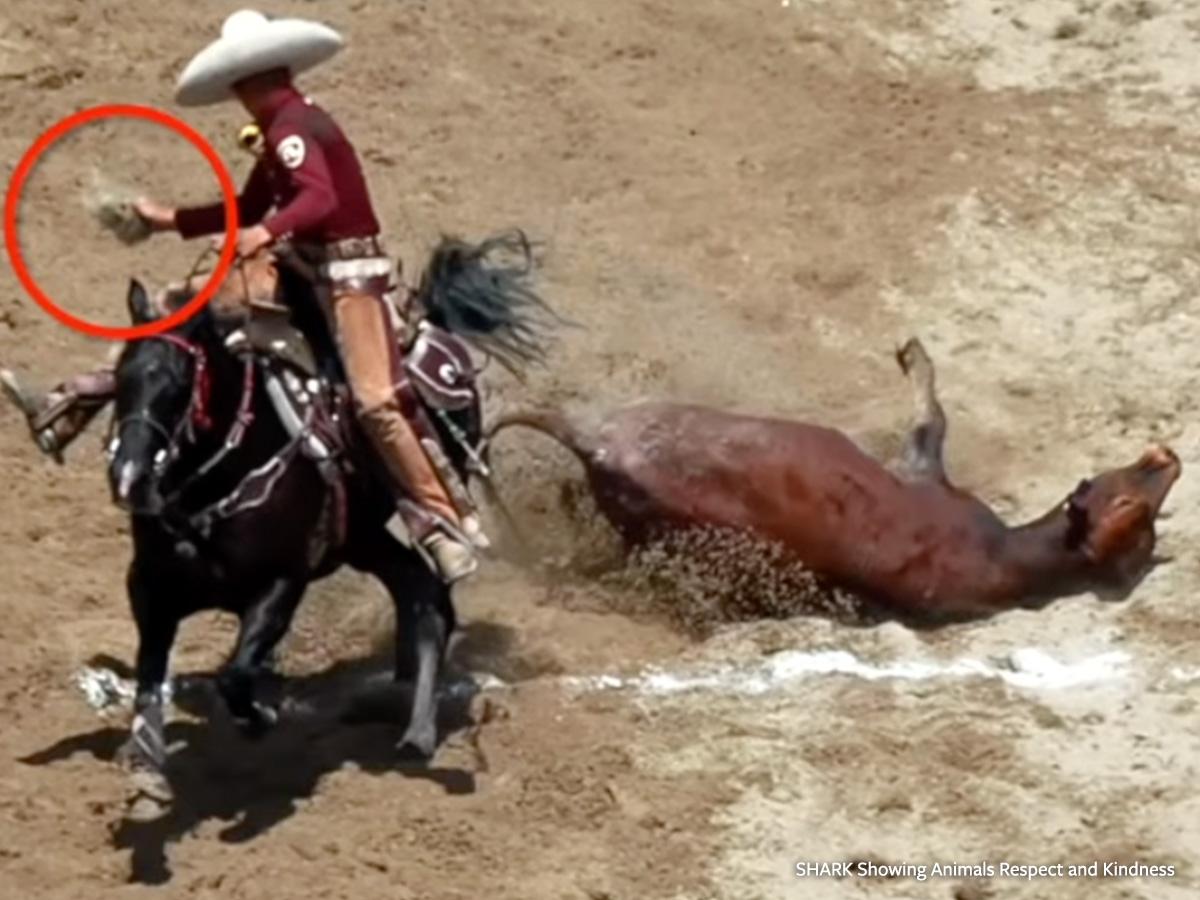
Showing Animals Respect and Kindness (SHARK) has gathered video evidence at multiple events across several counties in Illinois exposing extreme cruelty to animals, particularly at “steer tailing” events, where a person on horseback grabs a running steer by the tail, wraps it around their leg and takes off at an angle, resulting in the steer being violently slammed to the ground. Not only is that alone terrifying and painful, but it also results in broken bones or degloving, where their skin is torn off their tails. Horses can also be injured in this event.
This and other horrifying acts, including beating horses, shocking steers, and leaving animals without veterinary care, should result in charges under the Humane Care for Animals Act. The Humane Care for Animals Act in Illinois applies to all animals, whether domestic or wild, and is designed to prevent cruelty, neglect, and abuse. Passed in 2003, the law mandates that animals receive humane treatment, including proper food, water, shelter, and veterinary care. It also makes it illegal to harm, neglect, or abandon animals, with penalties for those who violate these protections. Recent amendments have strengthened the law, ensuring stricter enforcement and extending protections for animals under human care.

If someone intentionally degloves an animal's tail — inflicting grave pain and serious injury — that would constitute “aggravated cruelty” under the Act. Upon conviction, the offender should face a Class 4 felony charge (and a Class 3 felony for any subsequent offense), with penalties that could include 1 to 3 years in prison for a Class 4 felony, or 2 to 5 years for a Class 3 felony. The offender may also face fines, psychological or psychiatric evaluation, treatment, and permanent prohibition from caring for animals.

Unfortunately, even though SHARK has presented evidence to officials in a number of counties, there have been few arrests, and permits continue to be granted for these events.
Even when there are charges, of which there have only been a small handful, they often result in mere probation and fines. This is unacceptable.

Letter to Decision Maker(s) for reference:
Subject: Stop Ignoring Animal Cruelty at Rodeos
I am writing to urge you to use your political influence to end the brutality of “steer tailing” events happening at Mexican-style rodeos in Illinois.
Showing Animal Respect and Kindness (SHARK) has presented compelling video evidence to officials in several counties exposing obvious violations of the Humane Care for Animals Act, yet there have been few arrests, and permits continue to be granted for these cruel events where a person on horseback grabs a running steer by the tail, wraps it around their leg and takes off at an angle, resulting in the steer being violently slammed to the ground. Not only is that alone terrifying and painful, but it also results in broken bones or degloving, where their skin is torn off their tails. Horses can also be injured in this event.
The Humane Care for Animals Act in Illinois applies to all animals, whether domestic or wild, and is designed to prevent cruelty, neglect, and abuse. Passed in 2003, the law mandates that animals receive humane treatment, including proper food, water, shelter, and veterinary care. It also makes it illegal to harm, neglect, or abandon animals, with penalties for those who violate these protections. Recent amendments have strengthened the law, ensuring stricter enforcement and extending protections for animals under human care.
If someone intentionally degloves an animal’s tail — inflicting grave pain and serious injury — that would constitute “aggravated cruelty” under the Act. Upon conviction, the offender should face a Class 4 felony charge (and a Class 3 felony for any subsequent offense), with penalties that could include 1 to 3 years in prison for a Class 4 felony, or 2 to 5 years for a Class 3 felony. The offender may also face fines, psychological or psychiatric evaluation, treatment, and permanent prohibition from caring for animals.
This is blatant animal cruelty that has nothing to do with ranching history and should be banned in Illinois. In the meantime, law enforcement must take allegations of cruelty seriously. This and other horrifying acts, including beating horses, shocking steers, and leaving animals without veterinary care, should result in charges. Yet, even when there are charges, of which there have only been a small handful, they often result in mere probation and fines. This is unacceptable.
I expect to hear that you are acting on my assertions and that you will work with legislators to ban this despicable activity and hold animal abusers at all rodeos accountable.
Sincerely,
Signed
This alert is no longer active, but here for reference. Animals still need your help.


