

UPDATE: Serial Cat Killer Faced 40 Years, But the Judge Let Him Walk Free Instead

A man convicted of torturing and killing cats in Atlantic City, New Jersey, is already free, just one day after being sentenced. This is not just shocking. It is a profound failure of the justice system and a painful reminder that animals are still not protected as they should be under the law.
Edwin Sanabia was convicted after authorities said that he lured cats into his home with food, then tortured and killed them before discarding their bodies. Community members had been reporting missing cats. What they feared was happening behind closed doors was worse than they imagined.
We are deeply grateful to every single person who took action on this case. More than 11,000 supporters signed our alert demanding justice for these cats after learning how they were lured, tortured, and killed in Atlantic City. Your voices made it clear that this violence matters, that these lives matter, and that our communities expect accountability. While the outcome is profoundly disappointing, your advocacy brought visibility, pressure, and moral clarity to a case that could have been ignored. Please know that your action was not in vain; it is part of a growing movement that refuses to stay silent when animals are harmed, and together, we will keep pushing for stronger protections and real justice.
A grand jury brought 11 criminal counts against him, including eight third-degree charges for extreme cruelty and three fourth-degree charges.
Under New Jersey law, these are serious crimes.
Each third-degree charge carries up to five years in prison. Each fourth-degree charge carries up to 18 months. Altogether, Sanabia could have faced decades behind bars — more than 40 years if sentenced to the fullest extent allowed by law.
Instead, that is not what happened.
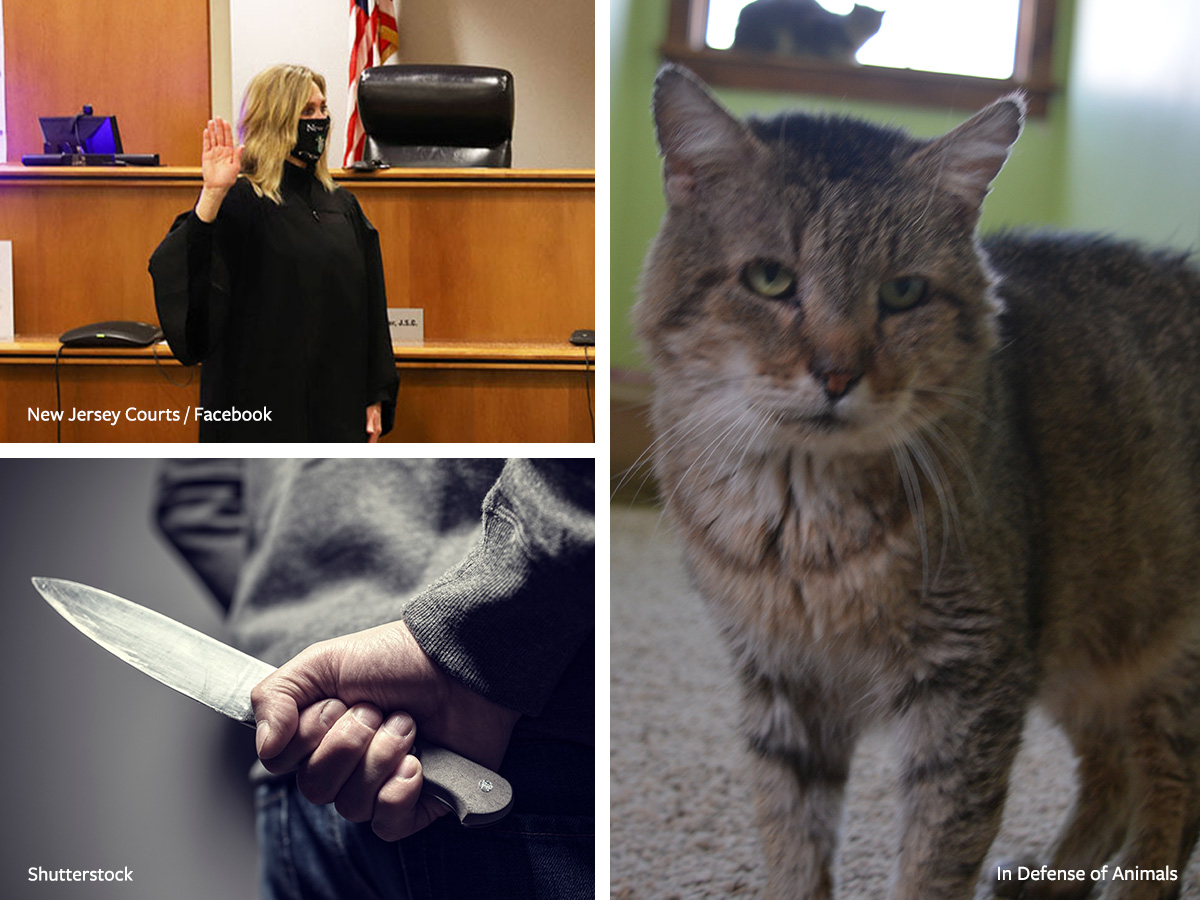
Superior Court Judge Donna Taylor agreed to a plea deal and sentenced Sanabia to only 364 days in jail, along with five years of probation and a $1,000 fine. Because he had already served 237 days while awaiting trial, he was released almost immediately.
A sentence that could have reflected the severity of repeated torture became a technicality. A man convicted of killing cats walked free.

The case was prosecuted by the Atlantic County Prosecutor’s Office under Prosecutor William E. Reynolds, with Chief Assistant Prosecutor Lynn Heyer arguing against Sanabia’s release. We are grateful for her effort to pursue accountability.
But the outcome reveals something deeper than one case.
It reveals a system where even the most extreme cruelty can result in minimal consequences.
Patrick’s Law was supposed to strengthen accountability by elevating the most serious animal cruelty offenses in New Jersey, including cases where an animal is killed, to third-degree crimes punishable by up to five years in prison.
In another New Jersey case, that stronger penalty mattered: in 2024, Monmouth County’s Bani Mezquititla received the full five-year maximum for torturing, sexually abusing, and killing his cat. This case proves that New Jersey courts are not powerless to impose real prison time in extreme-cruelty cases. The law made a serious sentence possible there. What failed here was not just the statute, but the willingness to pursue and deliver the strongest outcome available.
As In Defense of Animals’ Senior Campaigner Doll Stanley has emphasized, violence against animals is not isolated. Law enforcement has long recognized the connection between cruelty to animals and violence toward people.
When someone commits repeated acts of torture against animals and is released immediately after sentencing, it does not just fail animals. It puts entire communities at risk.
And it sends a devastating message: that even the most horrific suffering inflicted on animals may carry little consequence.
The cats in this case were individuals. They felt fear. They experienced pain. Their lives mattered. They deserved protection. They deserved justice.
Instead, they were failed.
Take Action: File a Complaint About This Sentence
Judicial decisions shape whether laws protect animals or fail them.
Judge Donna Taylor had the authority to impose a sentence that reflected the severity and repeated nature of these crimes. Instead, the outcome allowed for immediate release.
You can take action by filing a complaint with the New Jersey Advisory Committee on Judicial Conduct.
File your complaint here using the official New Jersey judicial conduct form:
New Jersey Advisory Committee on Judicial Conduct Form
While this committee cannot change the sentence, it can review whether judicial conduct or decisions undermine public confidence in the courts, and your voice plays a critical role in that accountability.
Step-by-Step: How to Fill Out the Complaint Form
Follow this guide to make your complaint as effective as possible.
1. Your Name
Enter your full legal name.
2. Mailing Address
Enter your full address.
3. City, State, ZIP
Enter your city, state, and ZIP code.
4. Telephone Number
Provide the best number to reach you.
5. Name of Judge
Donna Taylor
6. County/Municipality
Atlantic County, New Jersey
(You may also write: Atlantic County Superior Court)
7. Case Number
If unknown, write: Unknown
8. Attorneys Involved
You may write:
Atlantic County Prosecutor’s Office
Chief Assistant Prosecutor Lynn Heyer
Contact information unknown
Or simply: Unknown
9. Witnesses
Write: None known
What to Write in Your Complaint
Keep your message factual, respectful, and focused on accountability.
You may use and personalize the following:
I am submitting this complaint regarding Judge Donna Taylor in Atlantic County, New Jersey, in connection with the sentencing of Edwin Sanabia, who was convicted in a case involving the torture and killing of cats.
I am deeply concerned that a sentence of 364 days resulted in his immediate release due to time already served. In a case involving repeated acts of extreme cruelty, this outcome appears to undermine public confidence in the judicial system and suggests that severe violence against animals carries little meaningful consequence.
I understand that this committee cannot change the sentence. However, I am asking for a review of whether this outcome reflects conduct that damages public trust in the judiciary.
This case has caused widespread concern. Many believe the sentence failed to reflect the gravity of the crimes and the suffering inflicted. I respectfully request a thorough review of this matter.
You can also add a brief personal statement, such as:
- This outcome shook my confidence in the justice system
- Animals deserve meaningful protection under the law
- Accountability must reflect the severity of harm
Submit Your Complaint
Send your completed form to:
Advisory Committee on Judicial Conduct
P.O. Box 037
Trenton, NJ 08625-0037
Email: AOC-ACJCInfo.MBX@njcourts.gov
This Must Change
This case exposes a dangerous gap between what the law allows and what animals actually receive. More than 40 years of potential accountability became virtually nothing.
That is not justice. Until laws are strengthened and decisions reflect the true severity of these crimes, animals will continue to suffer, and cases like this will continue to happen.
Your voice matters. Public pressure matters. Together, we can demand a system that truly protects animals.


