

Save Primates from Lives of Suffering and Misery as Pets!
This alert is no longer active, but here for reference. Animals still need your help.
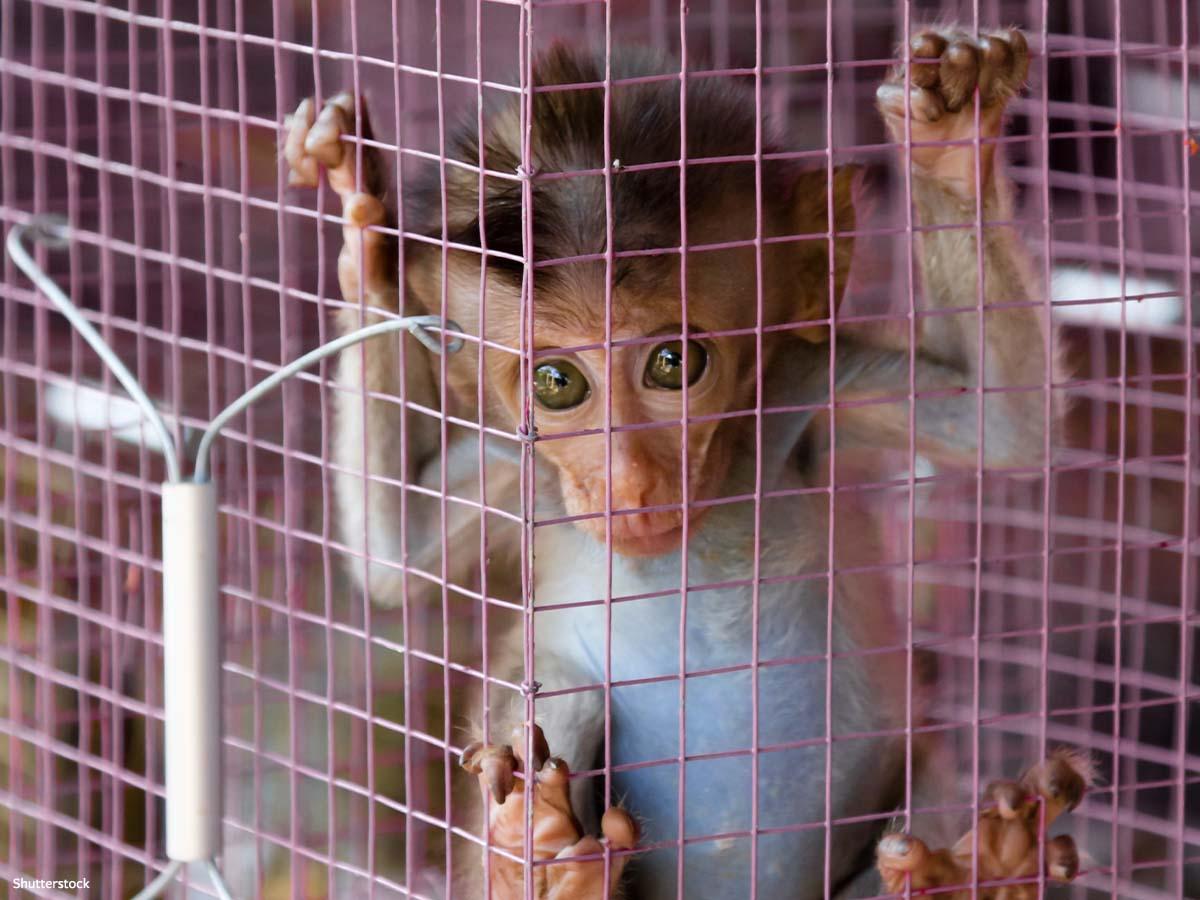
A new bill has been introduced to spare primates a life of misery and suffering as “pets.” The Captive Primate Safety Act will ban the trade of prohibited primate species in the United States for private possession. Please urge your U.S. congressional legislators to end the cruel primate pet trade today!
The Captive Primate Safety Act (CPSA) would ban the “importation, exportation, transportation, sale, receipt, acquisition, and purchase of any 'prohibited primate species' for private possession." The species prohibited under this bill include chimpanzees, galagos, gibbons, gorillas, lemurs, lorises, monkeys, orangutans, tarsiers, or any hybrid of such a species.
Humans are primates and we share undeniable similarities with other primates. We are all mammals with enhanced vision, large brains relative to our body size, front-facing eyes that allow for depth perception, five digits to grasp objects, and we experience slow growth and longer lifespans. Females birth a few offspring throughout their lifespans, typically one at a time, and nurse their young. Primates engage in complex social structures and communicate through vocalizations, facial expressions, gestures, touching, and more.
Just like humans, other primates can learn and have the ability to utilize tools to accomplish tasks. They feel joy, fear, pain, anger, and grief. Some species, such as chimpanzees, have even been known to have exceptional senses of humor and laugh at each others' jokes.
Nonhuman primates are native to tropical and subtropical forests where they are adapted for temperature, precipitation, vegetation, diet, and space. Confining these animals as “pets” deprives them of socialization with their species. They are also denied the mental stimulation they would naturally experience as they are unable to explore and learn in their natural habitats. Primates confined as “pets” are also unable to follow their instincts to procreate and care for their families, and are generally deprived of everything wild animals need to thrive.
Nonhuman primates are typically ripped away from their mothers and sold as babies. As they grow, their wild nature makes it evident that they suffer in captivity and cannot be controlled, creating a dangerous situation for the animals and their captors.
Sadly, primates are not only exploited within the pet trade. They are held captive for profits in zoos, experimented on in science labs, and used for entertainment purposes. The Captive Primate Safety Act would end the primate pet trade only, but it is a significant step in the right direction.

Letter to Decision Maker(s) for reference:
Decison maker: US representative and two senators
Subject: Vote YES on H.R. 3135 / S. 1588 to end the cruel primate pet trade!
As someone who is concerned with animal welfare and one of over 250,000 In Defense of Animals supporters, I’m writing to ask you to support the Captive Primates Safety Act (H.R. 3135 / S. 1588) to end the cruel and unnecessary primate trade.
The Captive Primate Safety Act (CPSA) would ban the importation, exportation, transportation, sale, receipt, acquisition, and purchase of any prohibited primate species for private possession as pets. The species prohibited under this bill include chimpanzees, galagos, gibbons, gorillas, lemurs, lorises, monkeys, orangutans, tarsiers, or any hybrid of such a species.
Humans are primates and we share undeniable similarities with other primates. We are all mammals with enhanced vision, large brains relative to our body size, front-facing eyes that allow for depth perception, five digits to grasp objects, and we experience slow growth and longer lifespans. Females birth a few offspring throughout their lifespans, typically one at a time, and nurse their young. Primates engage in complex social structures and communicate through vocalizations, facial expressions, gestures, touching, and more.
Just like humans, other primates can learn and have the ability to utilize tools to accomplish tasks. They feel joy, fear, pain, anger, and grief. Some species, such as chimpanzees, have even been known to have exceptional senses of humor and laugh at each others’ jokes.
The exploitation of nonhuman primates within the pet trade perpetuates the misery and suffering of animals with whom we share so many characteristics. Please end the primate pet trade by supporting the Captive Primate Safety Act today.
Sincerely,
Signed
This alert is no longer active, but here for reference. Animals still need your help.


