

WATCH: Protecting Wolves & Wild Horses Across California’s Landscape
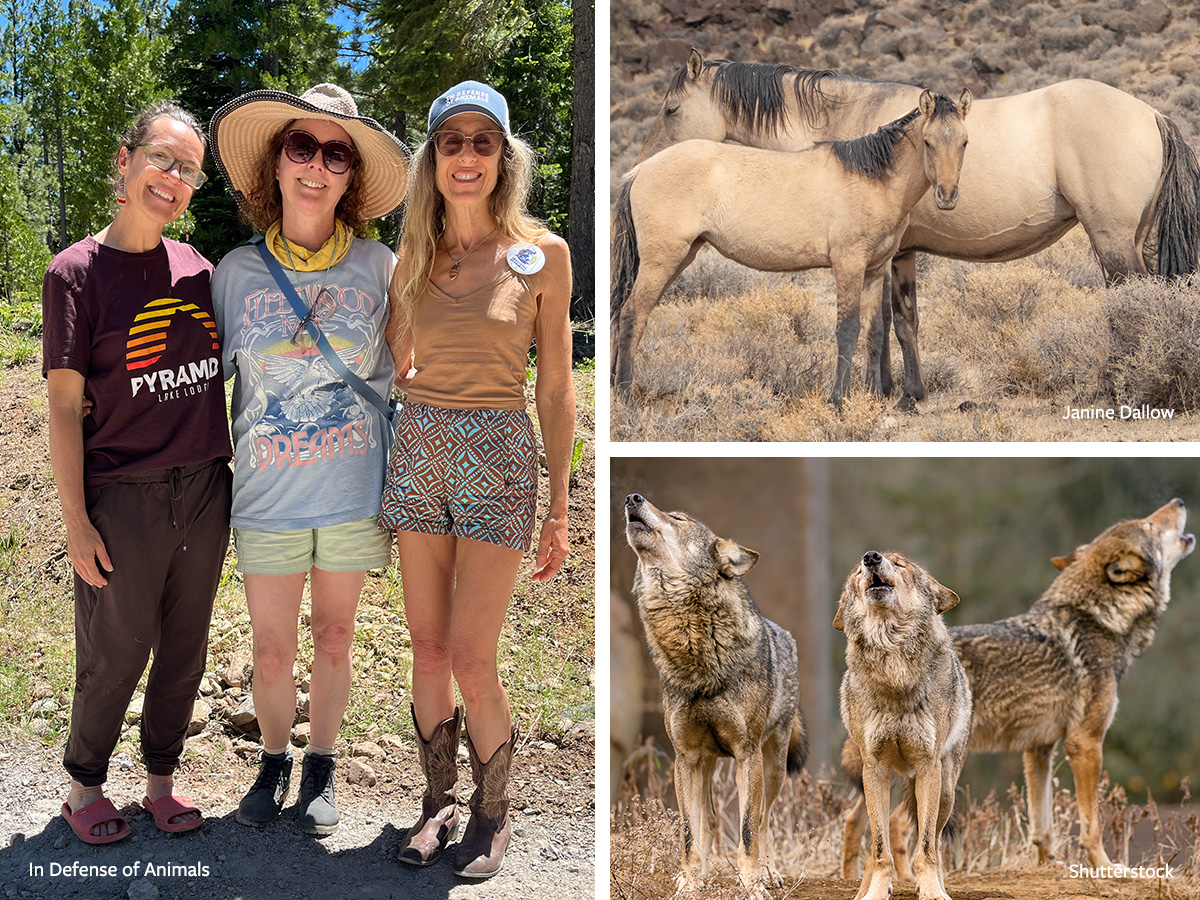
Protecting wild animals means showing up in the field, in communities, and wherever decisions affecting their lives are made. That’s why In Defense of Animals traveled to Modoc County and Sierra Valley to document threats and explore practical solutions for California’s wolves and wild horses.
Standing With California’s Wolves
California’s recovering wolves are expanding into landscapes where ranching and other human activities are already established. Sierra Valley is a particularly poignant example. The Beyem Seyo Pack was killed after wolves hunted cows destined for slaughter, yet wolves continue returning to this landscape.
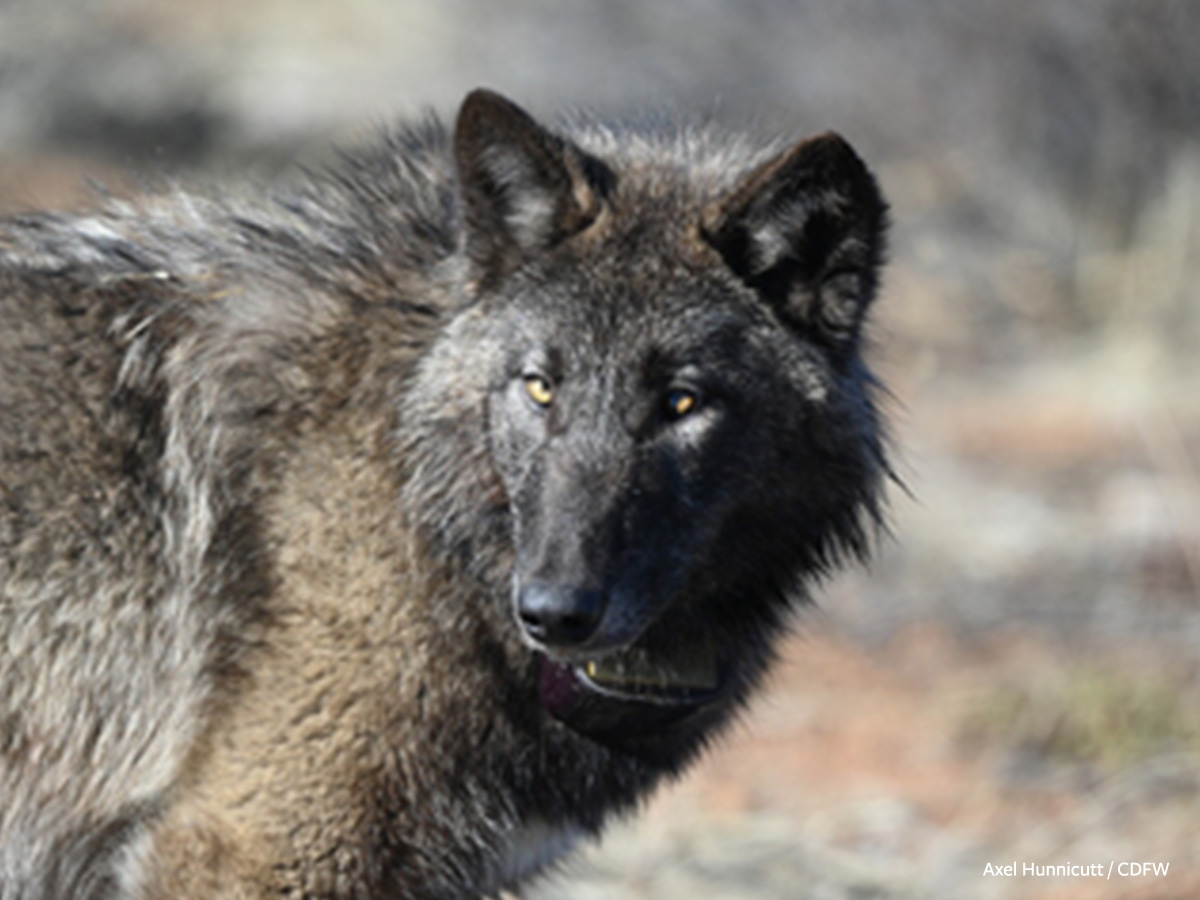 BEY01F, a female born in the Beyem Seyo Pack’s 2023 litter, was one of four wolves tragically killed for hunting cows in Sierra Valley.
Now, a breeding wolf pair and their pup have appeared as the Long Valley Pack, offering a powerful reminder of their resilience and determination to reclaim their historic range.
Our field research and Fireside Chat, “Wolves & Wild Horses: Land, Water, and Space in the Modern West,” explored how proactive coexistence can prevent conflicts before they escalate.
Solutions include trained range riders, trail cameras, responsible drone monitoring, rapid information sharing, and stronger relationships with local communities. California Department of Fish and Wildlife also recognizes nonlethal deterrents, including range riders, turbo fladry, radio-activated guard devices, and foxlights.
Protecting wolves requires protecting the ecosystems they depend upon, and which depend upon them for long-term health. Healthy wild prey populations, connected habitat, and functioning ecosystems are essential for their recovery.
California's wolves also gained important legal protections in September when Gov. Gavin Newsom vetoed legislation that threatened endangered animals and signed a new law promoting nonlethal coexistence. Read more about California's recent victories for wolves and other wild animals.
Protecting the Carter Reservoir Horses
Our expedition also took us into the remote, healthy high desert landscape of the Carter Reservoir wild horses, where intact ecosystems, including predation, are central to the herd’s survival.
Due to pressure from local ranchers, this herd faced a planned Bureau of Land Management roundup scheduled for Sept. 1. The plan was to remove an estimated 470 wild horses from their almost 300,000-acre Herd Area, and only release 15 horses after treating them with chemical birth control. Since then, a judge granted a temporary injunction putting the roundup on hold while litigation proceeds. The BLM is appealing the injunction, but for now, the horses have a reprieve.
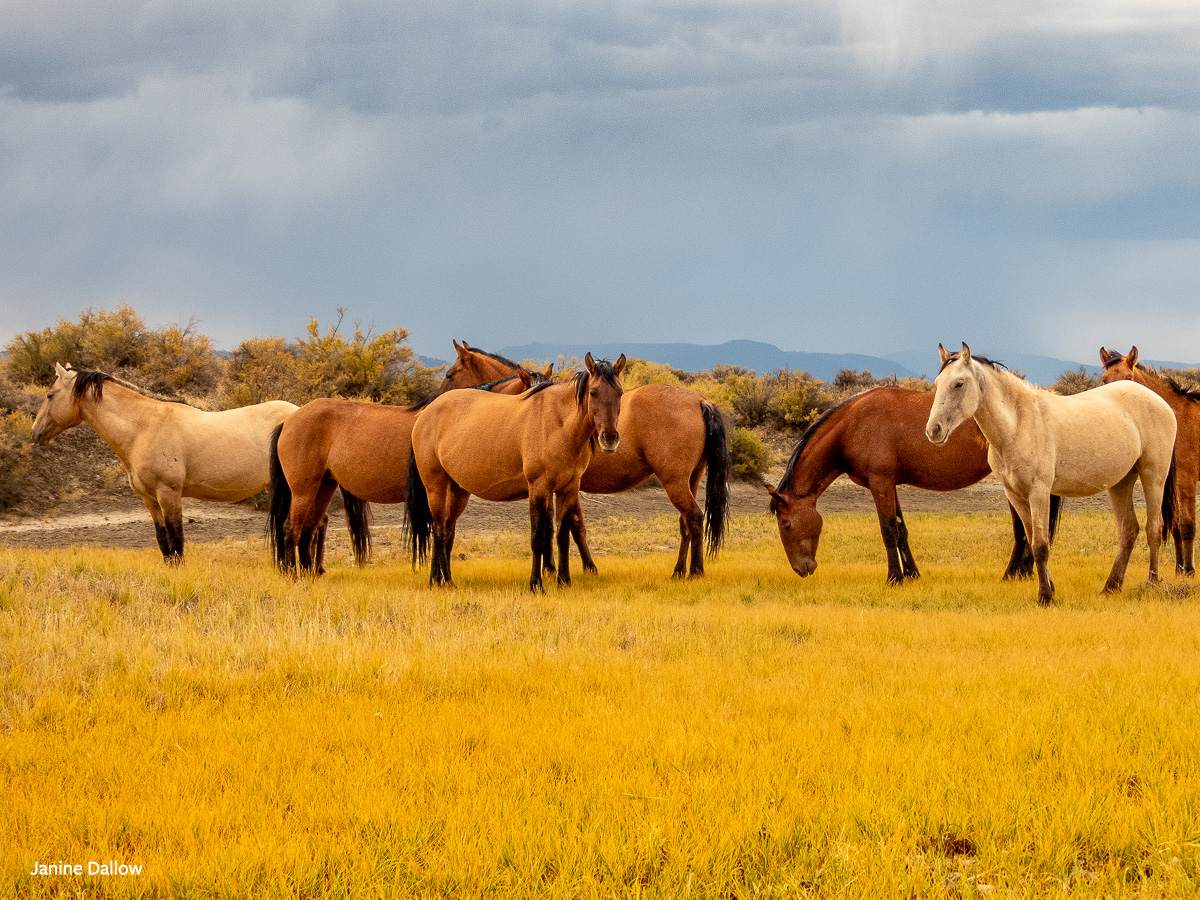 Recent images of healthy Carter Reservoir wild horses show their habitat was not impacted by the Vya S-1 fire, which burned mostly outside of the Herd Management Area.
The Vya S-1 fire also burned private lands along the eastern edge of their habitat, mostly outside the Herd Management Area, where wild horses do not graze down woody fuels. Post-fire documentation shows minimal to no impact on the horses’ habitat.
Keeping Space for Wild Animals
Our Modoc expedition reinforced a simple truth: Wolves and wild horses need healthy, connected landscapes where they can live and thrive. Water, habitat, prey, migration routes, biodiversity, and human land use are interconnected.
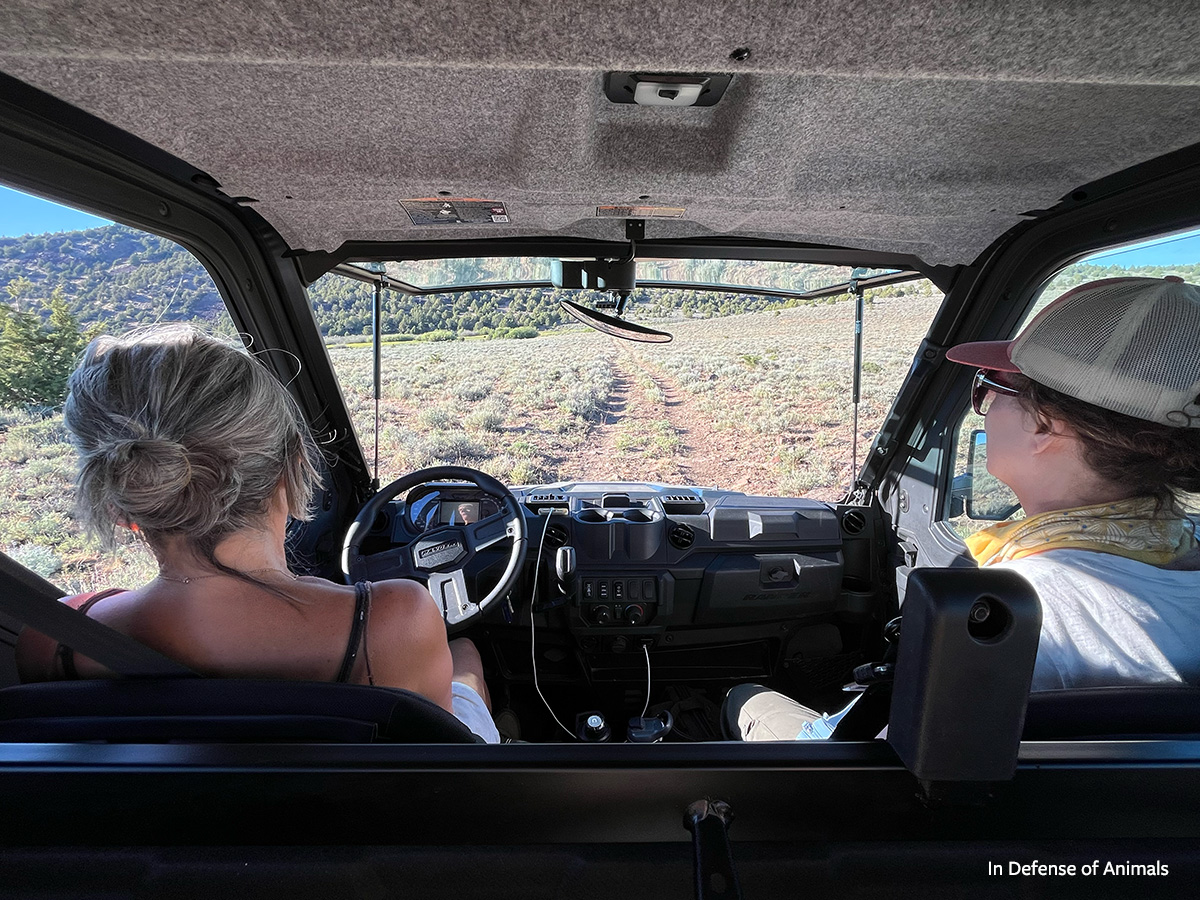 Wild Horse Advocate Janine Dallow and Wolf Field Researcher Julia Orr travel to remote areas of Modoc County to view Carter Reservoir wild horses.
Wild horse roundups drive wild horses from their homes using helicopters, vehicles, and other forceful methods, separating families, causing fear and injuries, and removing them from the freedom of their natural habitat. Thousands of wild horses are shipped to kill pens and Sale Authority auctions, where they may enter the slaughter pipeline through Canada and Mexico.
Tell Congress to close the slaughter loophole in the SAFE Act and to stop helicopter roundups.
We will keep showing up to build relationships, document threats, support humane solutions, and advocate for wolves and wild horses.
Wild animals need space to live, move, raise their families, and remain wild. Humans need wild animals to support healthy ecosystems on which all life depends.
Support our efforts to protect wolves and wild horses by making a donation today!


