

URGENT: Save Endangered Species in Guam by Protecting Their Habitat
This alert is no longer active, but here for reference. Animals still need your help.
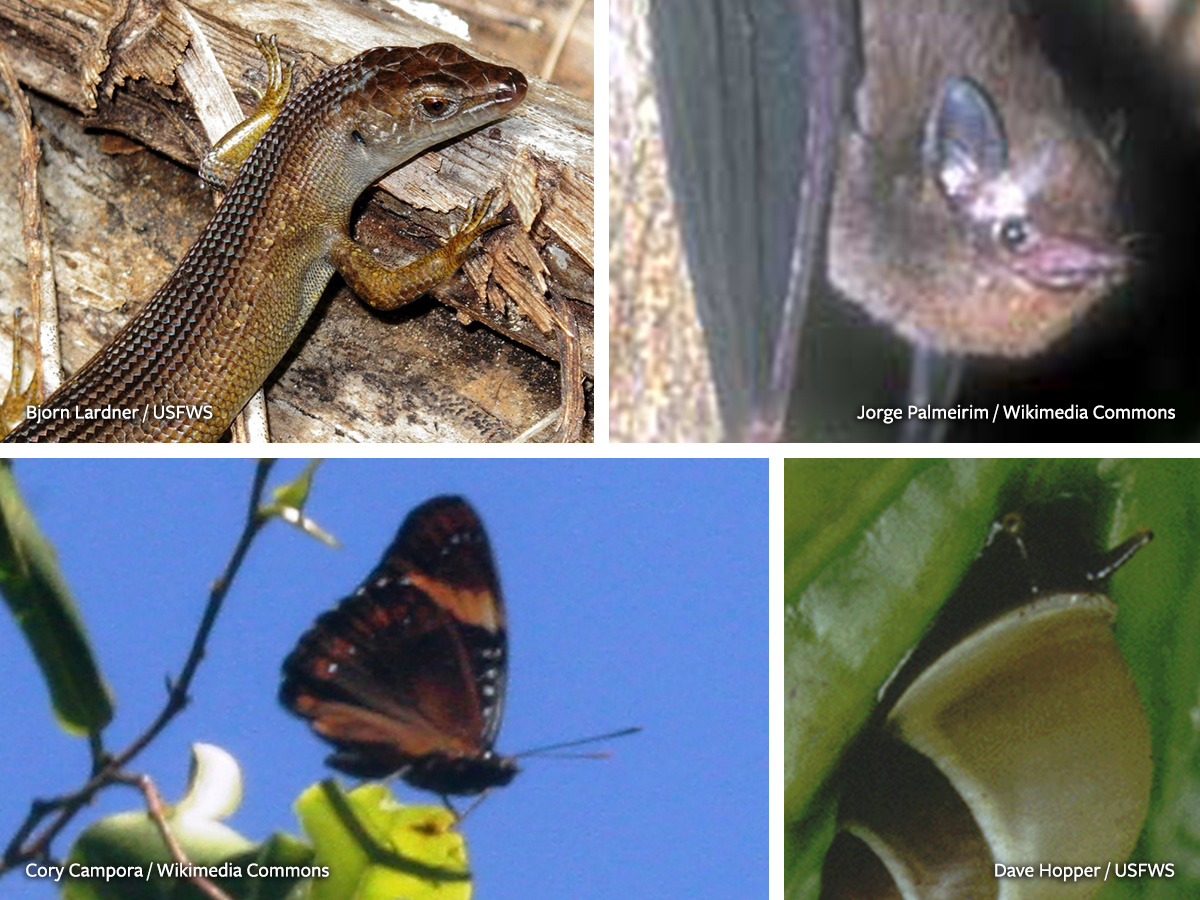
The critical habitat designation proposed would protect approximately 59,886 acres across the Northern Mariana Islands, safeguarding the homes of a diverse group of species, including land snails, butterflies, a damselfly, Slevin's skink, the Pacific sheath-tailed bat, and numerous native plants.

Among those who stand to benefit are four endangered tree snails — the fragile, Guam, humped, and Langford's tree snails — as well as the Mariana eight-spot butterfly, Mariana wandering butterfly, and Rota blue damselfly. Insects and other small animals are often overlooked, yet they play irreplaceable roles in pollination, nutrient cycling, and maintaining healthy ecosystems. Protecting them means protecting the foundation of life on these islands.
Slevin's skink, a rare forest-dwelling lizard, and the Pacific sheath-tailed bat, a small bat with a distinctive tail extending from their wing membrane, also depend on these habitats for survival.
These species face mounting threats from habitat loss and degradation, driven by development, drought, wildfires, and natural disasters such as typhoons and earthquakes, all of which are being intensified by the current climate crisis. Without strong habitat protections, these animals and plants face an even greater risk of extinction.
The complete list of animal and plant species whose members are endangered is here:
Animals
- Pacific sheath-tailed bat — Emballonura semicaudata rotensis
- Slevin's skink — Emoia slevini
- Fragile tree snail — Samoana fragilis
- Guam tree snail — Partula radiolata
- Humped tree snail — Partula gibba
- Langford's tree snail — Partula langfordi
- Mariana eight-spot butterfly — Hypolimnas octocula marianensis
- Mariana wandering butterfly — Vagrans egistina
- Rota blue damselfly — Ischnura luta
Plants
- Wild onion / siboyas halomtano / siboyas halumtanu / siboyan halomtano — Bulbophyllum guamense
- No common name — Dendrobium guamense
- No common name — Eugenia bryanii
- Pao dedo / paodedu / pao doodu — Hedyotis megalantha
- Ufa halomtano / ufa halumtanu — Heritiera longipetiolata
- No common name — Maesa walkeri
- No common name — Nervilia jacksoniae
- Maigo lalo — Phyllanthus saffordii
- Aplohkateng palaoan / applok hatting palaoan / aplokkating palaoan — Psychotria malaspinae
- No common name — Tabernaemontana rotensis
- No common name — Tinospora homosepala
- No common name — Tuberolabium guamense
- Fadang / faadang — Cycas micronesica
Designating critical habitat is one of the most effective tools we have to protect endangered species and preserve biodiversity. It also supports ecosystem resilience, which is vital for local communities and economies that rely on healthy environments. It is critical that the U.S. Fish and Wildlife Service prioritizes the long-term survival of these species and ensures that habitat protections are as strong and comprehensive as possible.

Letter to Decision Maker(s) for reference:
Subject: Support for Critical Habitat Designation for 22 Mariana Islands Species (Docket # FWS-R1-ES-2024-0194)
I am writing to express strong support for the proposed designation of critical habitat for 22 endangered species in Guam and the Commonwealth of the Northern Mariana Islands (Docket # FWS-R1-ES-2024-0194).
Protecting approximately 59,886 acres of habitat is essential to the survival and recovery of these species and to the long-term health of the islands’ ecosystems. Biodiversity is not only intrinsically valuable, but it also underpins economic stability in the region. Tourism and ecotourism in Guam and the Mariana Islands depend on healthy, functioning ecosystems, which in turn rely on the protection of native species and their habitats.
This proposal includes a remarkable range of species, from tree snails and butterflies to the Pacific sheath-tailed bat and Slevin’s skink. Even the smallest and often overlooked species, such as snails and insects, play vital roles in nutrient cycling, pollination, and overall ecosystem balance. Protecting them helps sustain the ecological foundations upon which all other species, including humans, depend.
These species face increasing threats from habitat loss and degradation driven by development, drought, wildfires, and natural disasters such as typhoons and earthquakes. The climate crisis is intensifying many of these pressures, making strong, proactive habitat protections more important than ever.
I urge the Service not to exclude the 3,981 acres currently under consideration for omission from the final designation. Existing conservation plans alone are not enough. These species need every available layer of protection to ensure their survival. Reducing the scope of designated critical habitat could undermine the effectiveness of this effort at a time when comprehensive action is urgently needed.
Designating the full 59,886 acres as critical habitat is a necessary and science-based step toward preventing further declines and supporting recovery. I respectfully urge you to finalize this designation in its entirety and ensure robust protections for these vulnerable species.
Thank you for your consideration of this important action.
Sincerely,
Signed
This alert is no longer active, but here for reference. Animals still need your help.


