

WATCH the Victory! Animals Win Big as Voters Reject Cruelty & Congress Changes
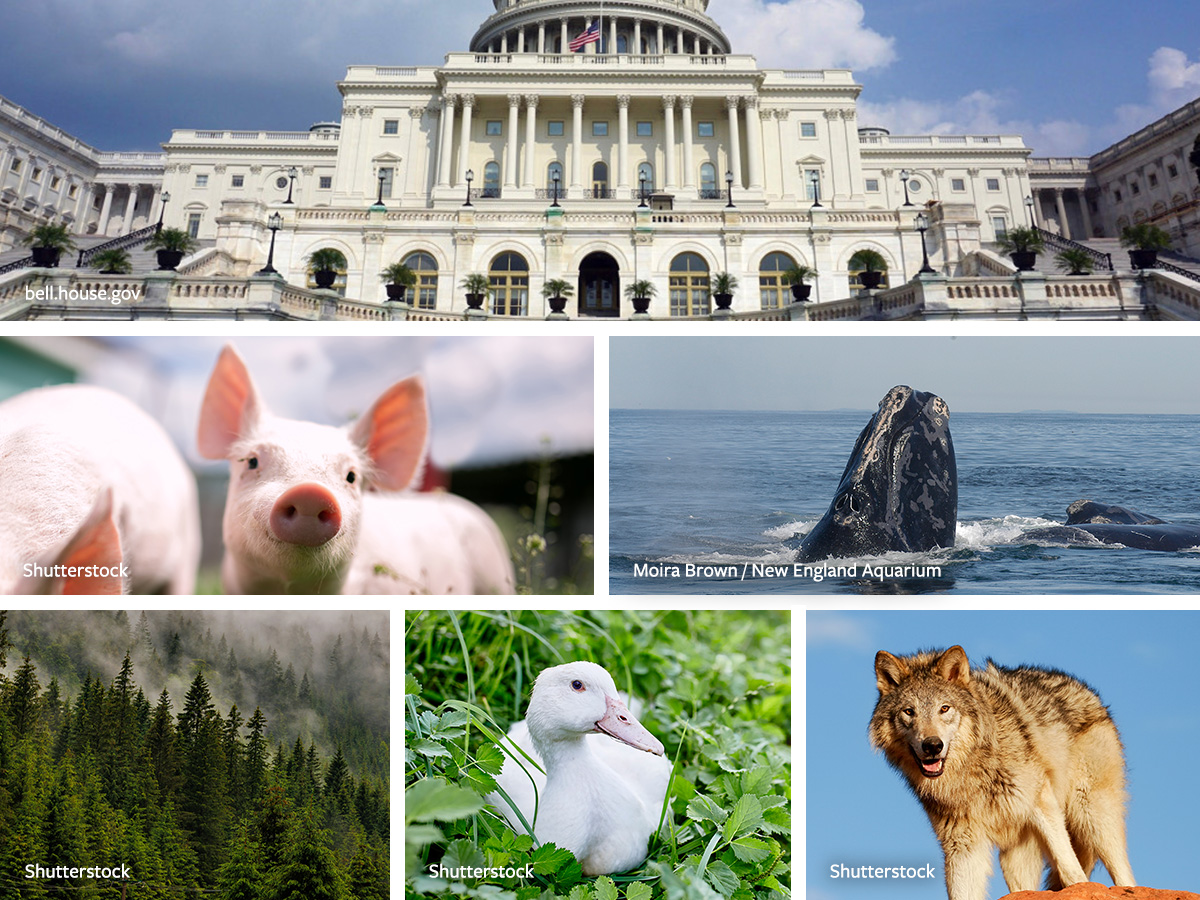
The 2026 midterm elections brought major changes for animals, including historic victories against foie gras cruelty, the defeat of a proposed constitutional right to hunt and fish, and significant turnover in Congress.
Across the country, voters decided on measures affecting the lives of ducks, geese, wild animals, and birds sold in stores. Meanwhile, several lawmakers who sponsored or supported legislation opposed by In Defense of Animals lost their elections, while others are leaving Congress.
These developments highlight both the progress being made for animals and the urgent need to defend protections that remain under threat.
Animals Win At The Ballot Box
Historic Foie Gras Bans Win in Denver and Washington, D.C.
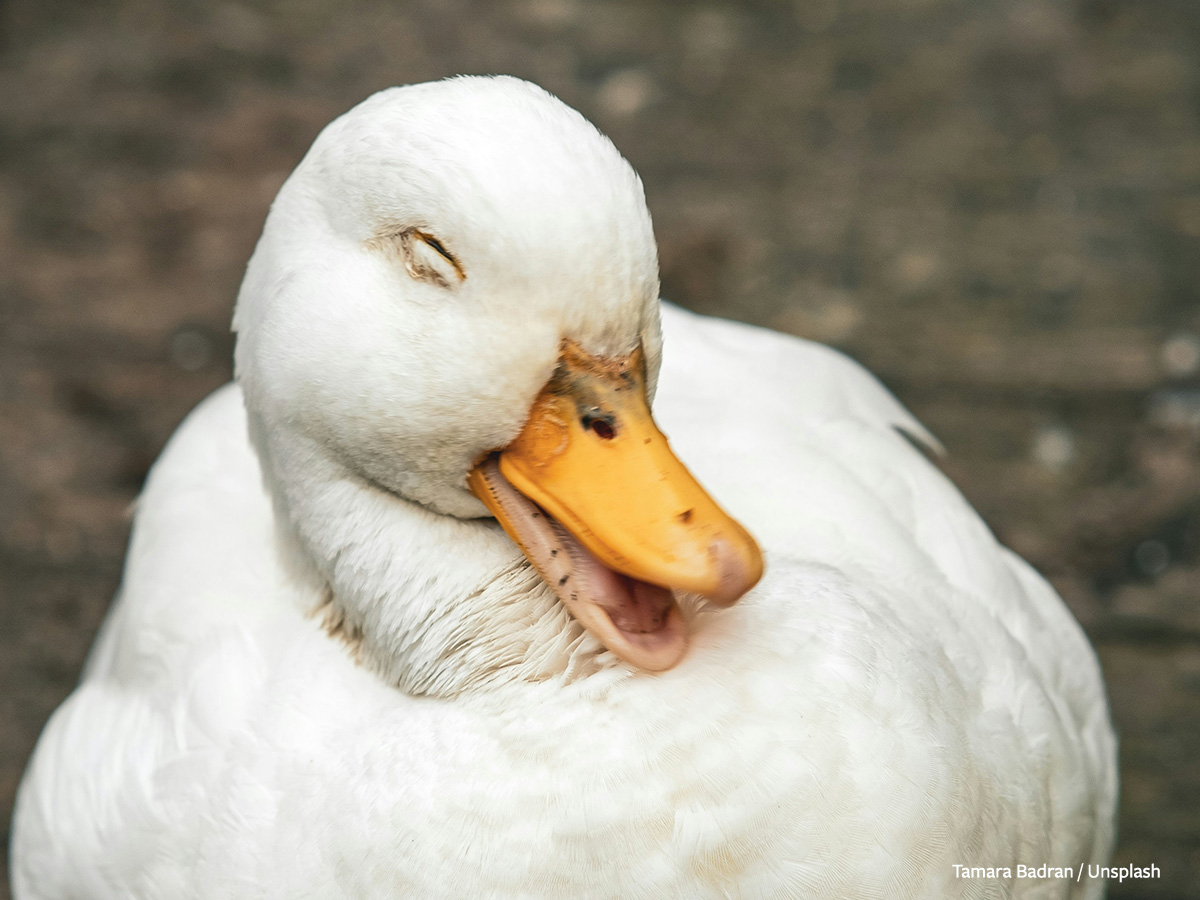
Voters in both Denver, Colorado, and Washington, D.C., voted to ban foie gras, taking a stand against the torturous force-feeding of ducks and geese. Denver’s Initiative 311 received approximately 66% of the vote, while D.C.’s Initiative 86 won an overwhelming 73%. These victories deal a major blow to the foie gras industry and bring greater attention to the horrendous suffering animals endure for unnecessary food products.
We extend our gratitude to Pro-Animal Future, whose Pro-Animal Colorado and Pro-Animal DC chapters led these successful campaigns, along with the organizations and advocates who supported them, including In Defense of Animals.
Colorado Rejects Right to Hunt as Similar Threats Spread Across States
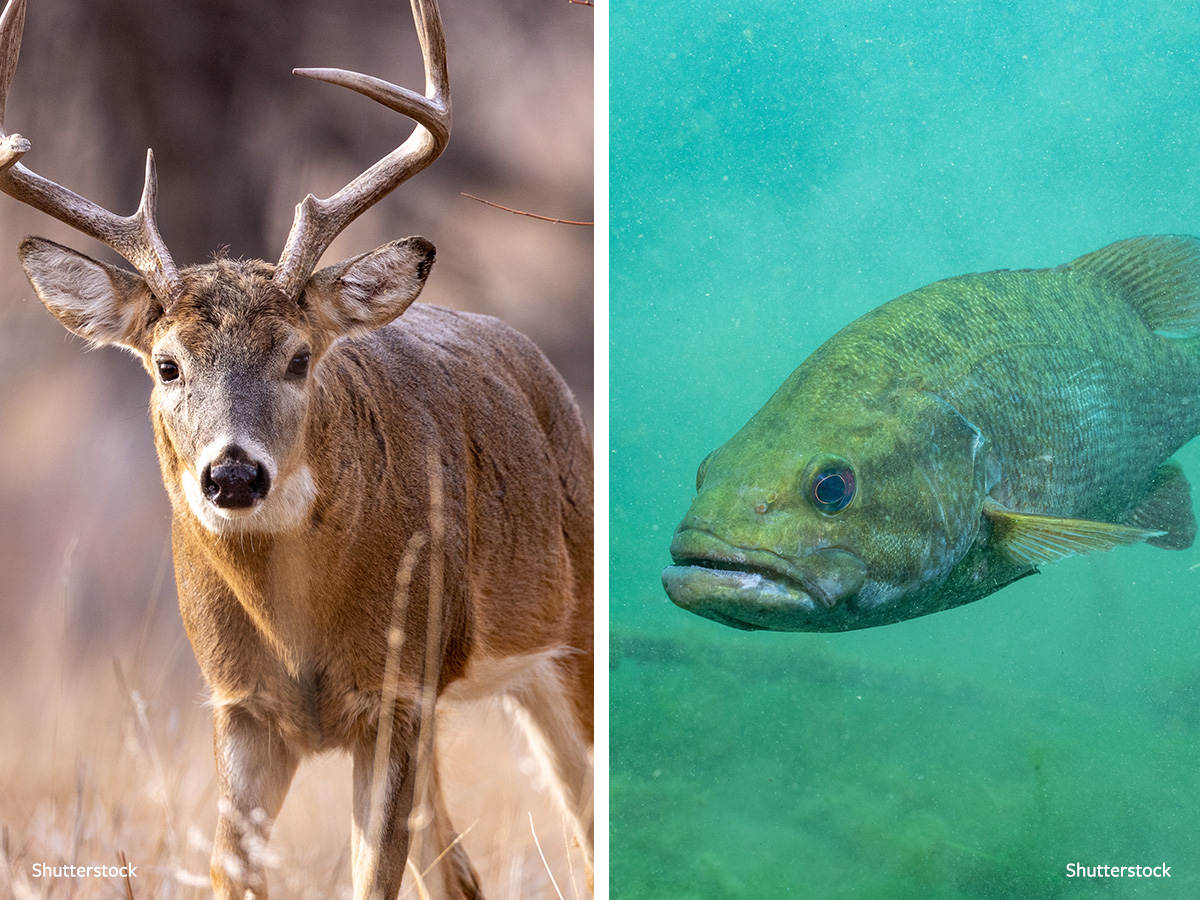
A ballot measure that would have been detrimental to wild animals failed to pass in Colorado. Amendment 83 would have codified the right to hunt and fish in the state constitution, solidifying hunting as the preferred method of "managing wildlife." Instead, Colorado voters sent a message that recreational hunting does not belong in the constitution, and certainly should not be the default approach to addressing conflicts with wild animals.
Thanks to advocacy and education from groups like Wildlife for All, voters were informed about the potential consequences of the amendment for wild animals. Ultimately, the measure was rejected, protecting Colorado's wild animals and the ability to prioritize science-based, humane approaches to conflict.
Colorado's rejection of Amendment 83 marked only the second time U.S. voters defeated a proposed constitutional right to hunt and fish, following Arizona's rejection of a similar ballot measure in 2010. In contrast, 24 states have adopted constitutional protections for hunting and fishing, making Colorado's vote a notable departure from a longstanding national trend.
Colorado was not alone in confronting efforts to elevate hunting above other approaches to wildlife management.
In Ohio, In Defense of Animals mobilized residents against S.J.R. 8, which sought to establish a constitutional right to hunt, fish, and kill wild animals. The proposed amendment would also have elevated hunting and fishing as preferred methods of wildlife management. Fortunately, the measure stalled in the Legislature and never reached voters in November 2026. However, the threat remains because lawmakers could still advance the proposal before the legislative session ends on Dec. 31.
Similar threats remain in other states. In New Jersey, S.C.R. 37 and A.C.R. 16 propose constitutional protections for hunting, fishing, and trapping. In Delaware, S.S. 1 for S.B. 212 would establish comparable constitutional rights. Although the Delaware proposal passed the Senate and advanced from a House committee, it has not received final legislative approval.
Together, these developments demonstrate how efforts to establish constitutional hunting rights continue across the country, even as Colorado voters rejected the idea.
Constitutionalizing hunting and trapping can create additional obstacles to future animal protection laws and undermine efforts to prioritize humane coexistence with wild animals. IDA continues to oppose these proposals and advocate for wildlife policies that protect animals and their habitats rather than prioritizing killing them.
Lemon Grove Voters Advance Protections for Birds
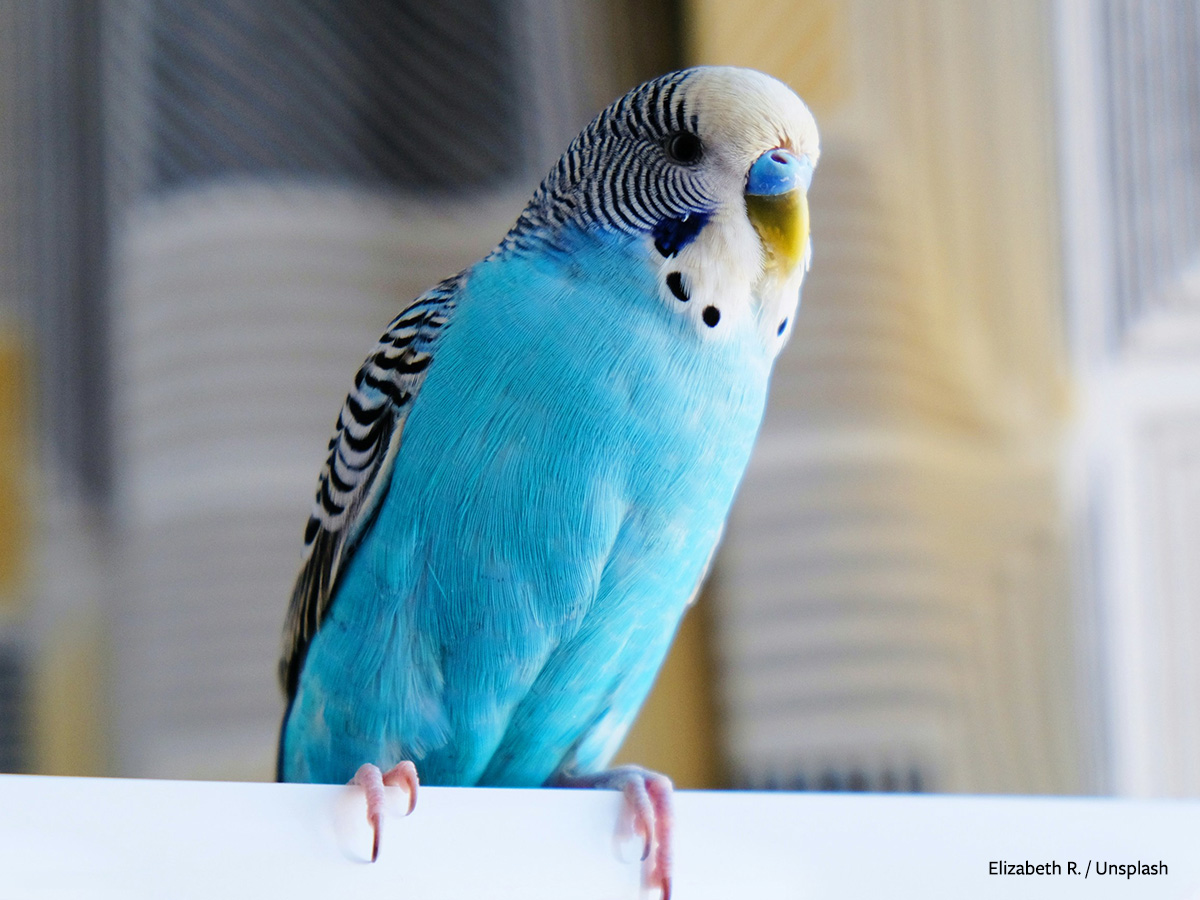
Lemon Grove, California, voters passed Measure E with approximately 66% support, ending the commercial sale of birds in pet stores and allowing only birds from qualified shelters and rescue organizations to be offered for adoption.
This important victory was made possible through the dedicated efforts of Strategic Action for Animals, which led the campaign, with financial and strategic support from World Animal Protection. We congratulate these organizations and the local advocates who worked to protect birds from cruel commercial breeding operations and create more opportunities for rescued birds to find loving homes.
Oregon's Historic Animal Protection Initiative Builds Momentum
Oregon’s IP28 (the PEACE Act) sought to protect all animals by challenging legal exemptions that permit their exploitation and killing in farming, hunting, fishing, animal experimentation, and other activities covered by existing exemptions. Despite fierce industry opposition, organizers gathered over 140,000 signatures in a remarkable grassroots effort, though the initiative ultimately fell short of the November ballot.
But this is far from the end! The organizers have reaffirmed their commitment to future ballot initiatives by founding the National Animal Life and Liberty Association, modeled after historic women’s suffrage associations. The organization gives members a voice and vote in leadership, initiatives, and the movement’s direction, building a lasting grassroots effort for animal life and liberty beyond any single election cycle.
Congressional Election Results Reshape Animal Protection Battles
The midterm elections also brought significant changes to Congress, including the departures of lawmakers who supported legislation opposed by In Defense of Animals.
From efforts to strip wolves of Endangered Species Act protections to proposals delaying safeguards for critically endangered North Atlantic right whales, the legislative records of outgoing lawmakers reveal the continuing threats facing animals.
In Defense of Animals is nonpartisan. We evaluate elected officials based on their actions affecting animals, regardless of political affiliation. We recognize lawmakers from either party who advance animal protections and hold those who undermine them accountable. Our commitment is to animals, not political parties.
The following lawmakers sponsored, cosponsored, or otherwise strongly supported legislation we opposed. Some lost reelection, while others lost campaigns for different offices or chose not to seek another congressional term. Their departures or lack of advancement do not automatically eliminate the legislation they supported.
Senate: Lawmakers Who Supported Threats to Animals Lose Their Seats
Susan Collins, Maine: Delaying Protections for Endangered Right Whales
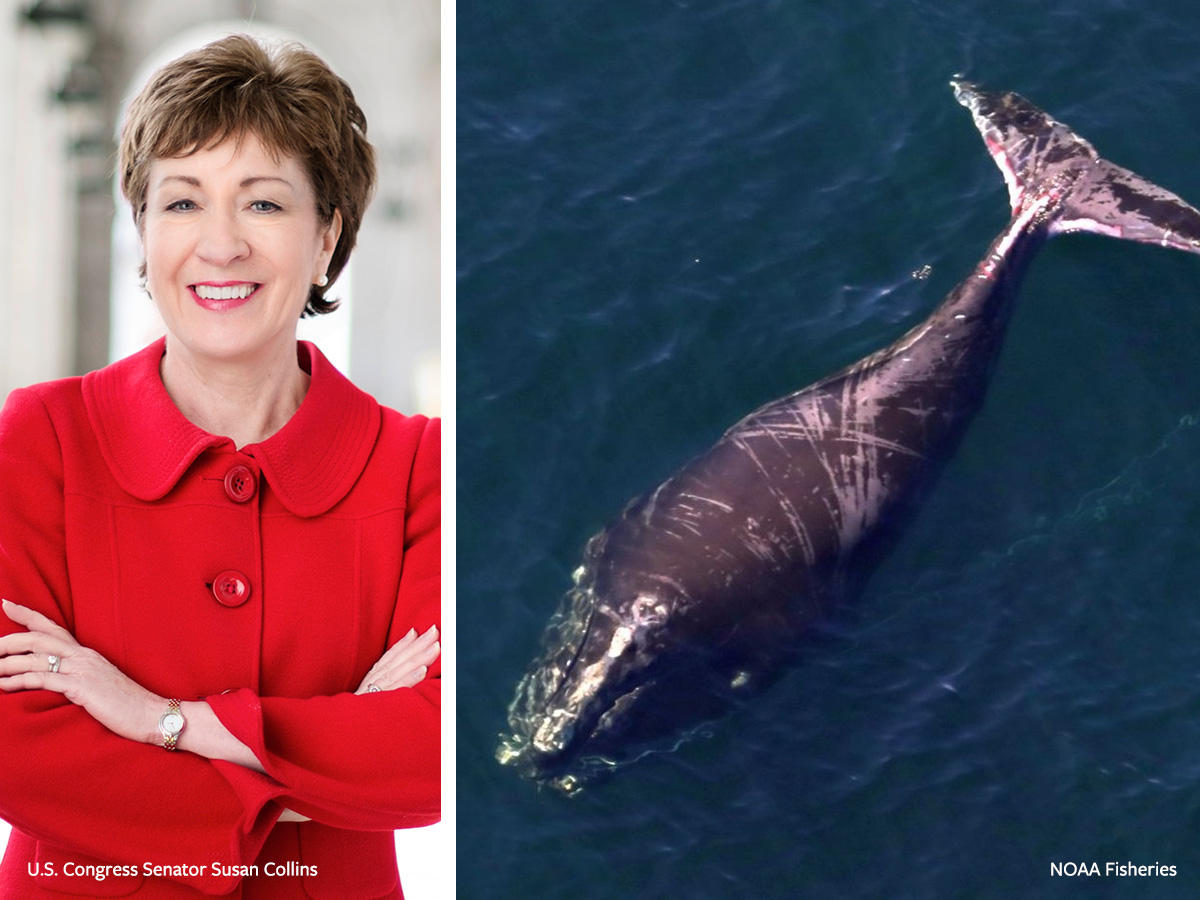
After 30 years in the U.S. Senate, Republican Susan Collins lost her reelection bid to Democrat Troy Jackson.
Collins played a significant role in efforts to delay stronger protections for North Atlantic right whales, among the world's most endangered large whales. She helped secure a provision postponing additional fishing regulations until 2028, then urged Senate leaders to advance legislation extending that delay until 2035.
In October 2026, Senate Commerce Committee Chairman Ted Cruz publicly credited Collins' leadership in advancing the Northeast Lobsterman Protection Act, H.R. 9436.
For right whales facing deadly entanglements in commercial fishing gear, another seven years without stronger safeguards carries potentially devastating consequences.
Collins also cosponsored the Whole Milk for Healthy Kids Act, which In Defense of Animals opposed over concerns about the dairy industry and children's health.
Collins' defeat ends three decades in the Senate and removes a prominent supporter of legislation delaying lifesaving protections for critically endangered North Atlantic right whales.
Roger Marshall, Kansas: Targeting Farmed Animal & Endangered Species Protections
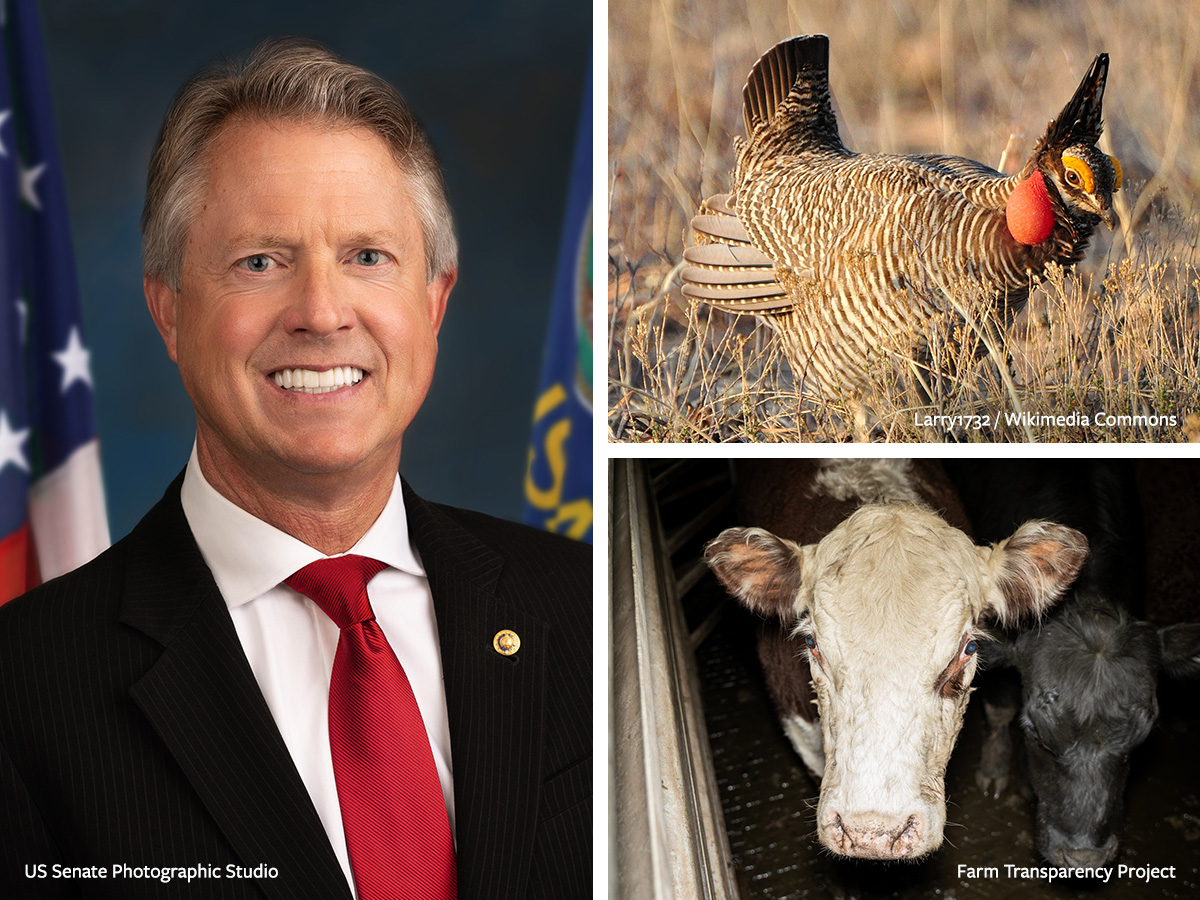
Republican Sen. Roger Marshall lost his reelection bid to Democrat Adam Hamilton, ending a six-year Senate tenure.
Marshall introduced the original Ending Agricultural Trade Suppression (EATS) Act in June of 2023, which threatened to override state animal protection laws nationwide, including California's Proposition 12. In Defense of Animals mobilized thousands of supporters against the legislation, which ultimately failed in Congress in 2024. The proposal threatened even modest protections against extreme confinement and other abuses in animal agriculture.
In April of 2025, Marshall was one of three Republican senators, alongside Chuck Grassley of Iowa and Joni Ernst of Iowa, who introduced legislation specifically targeting California's Proposition 12. The measure sought to overturn a state law providing modest but important protections against extreme confinement for pigs, calves, and chickens.
Marshall repeatedly sought to strip lesser prairie chickens of federal protections despite the devastating loss of approximately 90% of their historic grassland habitat. In February 2023, he introduced a resolution to overturn their Endangered Species Act protections. Although Congress passed the measure, President Biden vetoed it. Undeterred, Marshall introduced another bill in January 2025 to remove the species from federal protection and prevent future listings.
On Feb. 26, 2026, the Trump administration formally stripped both populations of lesser prairie chickens of federal Endangered Species Act protections, implementing court rulings that overturned the previous safeguards. Marshall publicly applauded the decision, which left these already imperiled birds without federal protections despite the ongoing destruction of their grassland habitats.
His defeat means a prominent sponsor of these measures will not return to the Senate in the next Congress.
House: Lawmakers Behind Threats to Animals Lose Elections
Lauren Boebert, Colorado: Leading the Attack on Gray Wolves

Republican Rep. Lauren Boebert, a prominent congressional opponent of federal wolf protections, lost her reelection bid to Democrat Eileen Laubacher, according to a Nov. 9, 2026, race projection by CNN.
Her congressional record connects her to multiple measures opposed by animal and environmental protection advocates, particularly legislation affecting wolves and their habitats.
Boebert's departure removes a supporter of three major threats to animals: stripping gray wolves of federal protections, weakening the Endangered Species Act, and undermining safeguards for forests and wildlife habitats.
Jared Golden, Maine: Repeatedly Pushing to Delay Protections for Endangered Whales
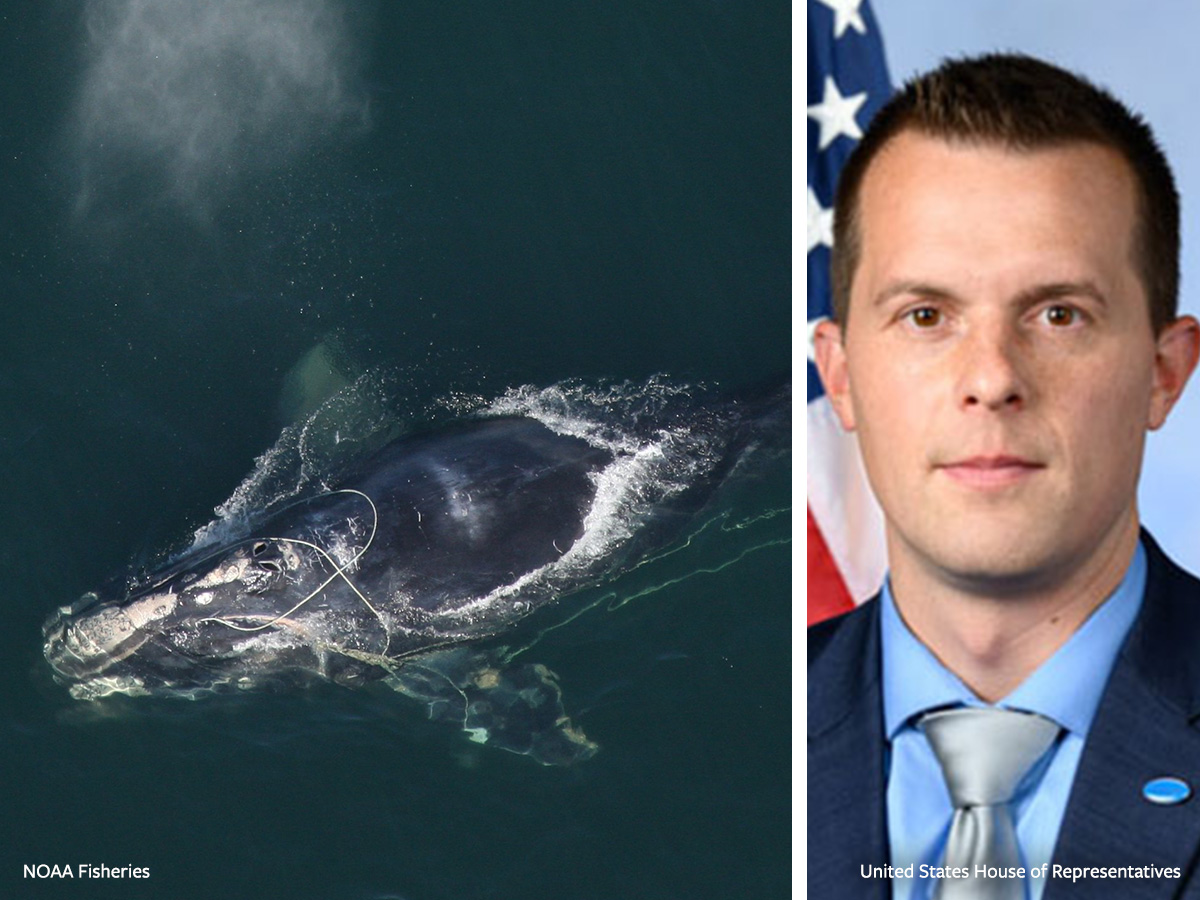
Democratic Rep. Jared Golden is leaving Congress after choosing not to seek reelection in 2026. His departure follows years of involvement in efforts to delay stronger protections for critically endangered North Atlantic right whales.
In December 2022, Golden joined four other Maine politicians, Republican Sen. Susan Collins, independent Sen. Angus King, Democratic Rep. Chellie Pingree and Democratic Gov. Janet Mills, in supporting a provision delaying stronger protections for North Atlantic right whales until 2028. The provision was inserted into a federal spending bill, postponing safeguards intended to prevent deadly fishing gear entanglements.
Rather than allowing these protections to take effect, Golden pushed for another extension. By October 2025, he was advocating to postpone stronger fishing regulations until 2035, prompting In Defense of Animals to mobilize supporters against another proposed delay. His effort followed a similar proposal from Republican Rep. Nick Begich of Alaska.
On April 27, 2026, Golden introduced H.R. 8509, seeking to extend the existing moratorium until 2035. Less than two months later, on June 24, Republican Rep. Mike Lawler introduced H.R. 9436, with Golden as an original cosponsor, pursuing the same objective. In Defense of Animals opposed both bills, warning that postponing lifesaving safeguards for another seven years would expose whales to continued suffering and deadly entanglements. Approximately 85% of North Atlantic right whales have experienced fishing gear entanglement.
On September 1, 2026, the House passed H.R. 9436 by a vote of 219-196, sending the legislation to the Senate. Golden's efforts to delay whale protections had advanced despite the species' critical conservation status.
Golden also cosponsored and voted to pass the Fix Our Forests Act, legislation that In Defense of Animals opposed over concerns that weakened environmental reviews and restrictions on legal challenges would put forests, wildlife habitats, and environmental safeguards at risk. The bill passed the House in January 2025 and remains pending in the Senate. Please take action!
Although Golden's departure will end his congressional role in these efforts, the threat to North Atlantic right whales remains urgent. H.R. 9436 has passed the House, and the Senate must still decide the legislation's fate. Take action now to urge senators to reject further delays and protect North Atlantic right whales before more lives are lost.
Golden's departure removes a longtime advocate of delaying protections for North Atlantic right whales, offering renewed hope for their survival.
Mike Lawler, New York: Leading Efforts to Delay Endangered Whale Protections Until 2035
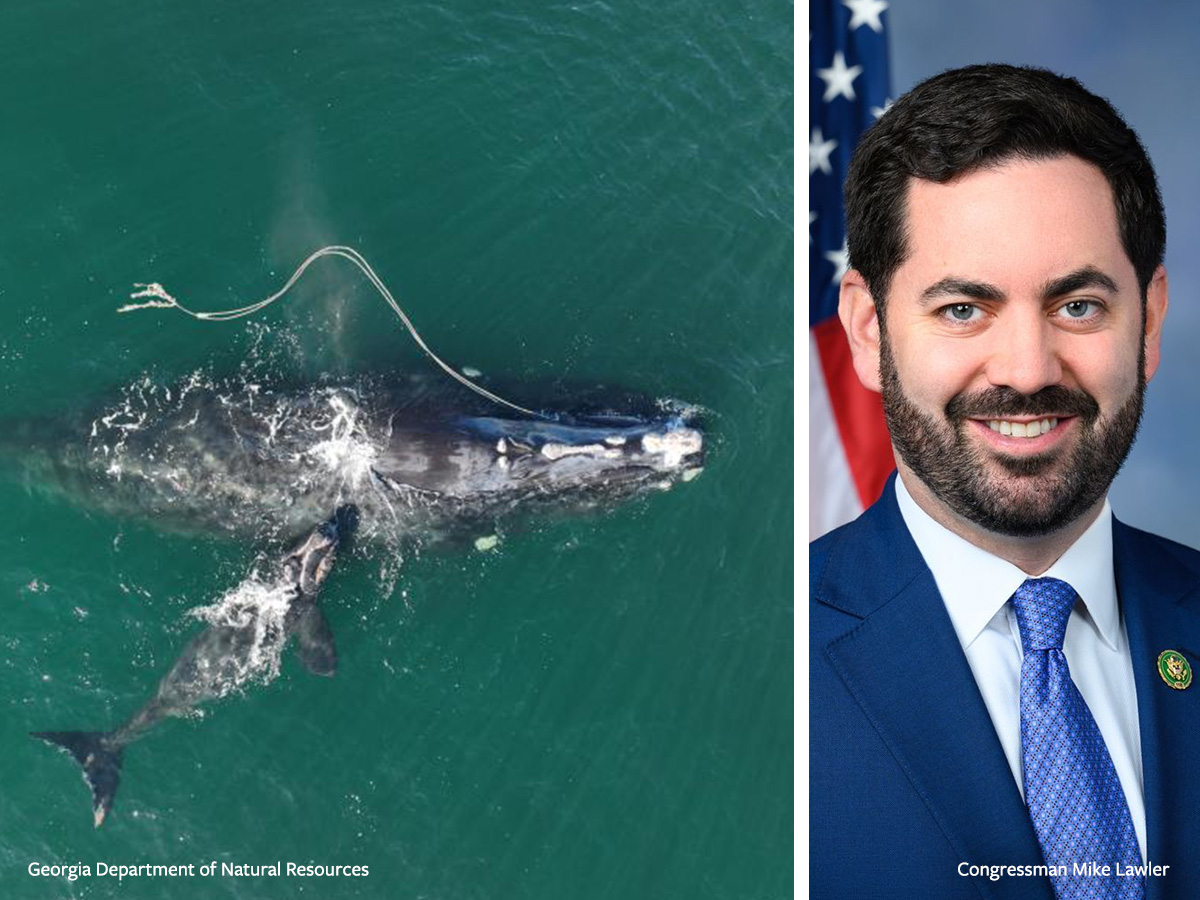
Republican Rep. Mike Lawler lost his reelection bid to Democrat Cait Conley in November 2026.
In June, Lawler introduced H.R. 9436, the Northeast Lobsterman Protection Act, with Democratic Rep. Jared Golden as an original cosponsor. The bill sought to delay stronger protections for critically endangered North Atlantic right whales until 2035, leaving these whales vulnerable to deadly fishing gear entanglements for another seven years. The House passed the legislation on Sept. 1, 2026, by a vote of 219-196, advancing the threat despite urgent warnings about the species' survival.
Lawler also cosponsored the Whole Milk for Healthy Kids Act, opposed by In Defense of Animals, which became law in January 2026. Although Lawler is leaving Congress, the whale legislation remains pending in the Senate. Take action now to urge senators to reject H.R. 9436 and protect North Atlantic right whales.
Lawler's defeat removes a leading sponsor of legislation threatening the survival of critically endangered North Atlantic right whales from Congress.
Rob Wittman and Marc Veasey: SHARKED Act Supporters Leaving Congress
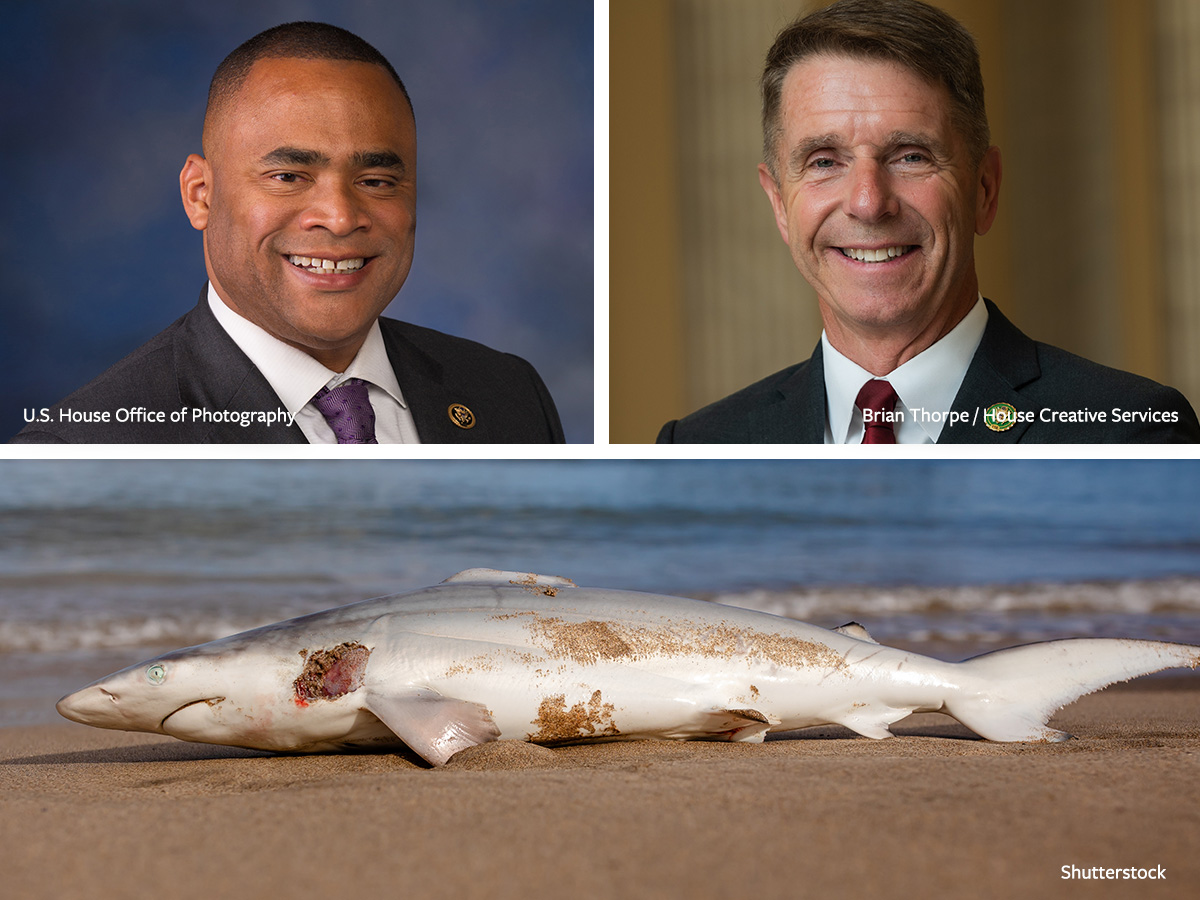
Republican Rep. Rob Wittman of Virginia lost his reelection bid to Democrat Shannon Taylor, while Democratic Rep. Marc Veasey of Texas chose not to seek another term in 2026.
Wittman sponsored the SHARKED Act of 2025, H.R. 207, with Veasey serving as an original cosponsor alongside Democratic Rep. Darren Soto. In Defense of Animals opposes the legislation over concerns that its approach to conflicts between sharks and commercial and recreational fishing operations could lead to policies harming already vulnerable shark populations. Take action now!
On April 9, 2025, Wittman voted in the House Natural Resources Committee to advance the Pet and Livestock Protection Act, H.R. 845, which would strip gray wolves of federal Endangered Species Act protections. He subsequently voted to pass the bill on Dec. 18, 2025, when the House approved it 211-204. The legislation remains pending in the Senate and still threatens gray wolves.
Their departures mean two original supporters of the SHARKED Act will not return to the next Congress.
Addison McDowell, North Carolina: Backing Changes to the Endangered Species Act

Republican Rep. Addison McDowell lost his reelection bid to Democrat Cyril Jefferson.
In Defense of Animals and other conservation advocates opposed the legislation over concerns that it would weaken protections for vulnerable species, restrict environmental oversight, and make it easier for development and other activities to threaten essential wildlife habitats.
McDowell's departure removes a supporter of legislation that would weaken the Endangered Species Act and threaten vital protections for vulnerable wild animals.
Ashley Hinson, Mariannette Miller-Meeks, and Zach Nunn, Iowa: Threatening Protections for Farmed Animals
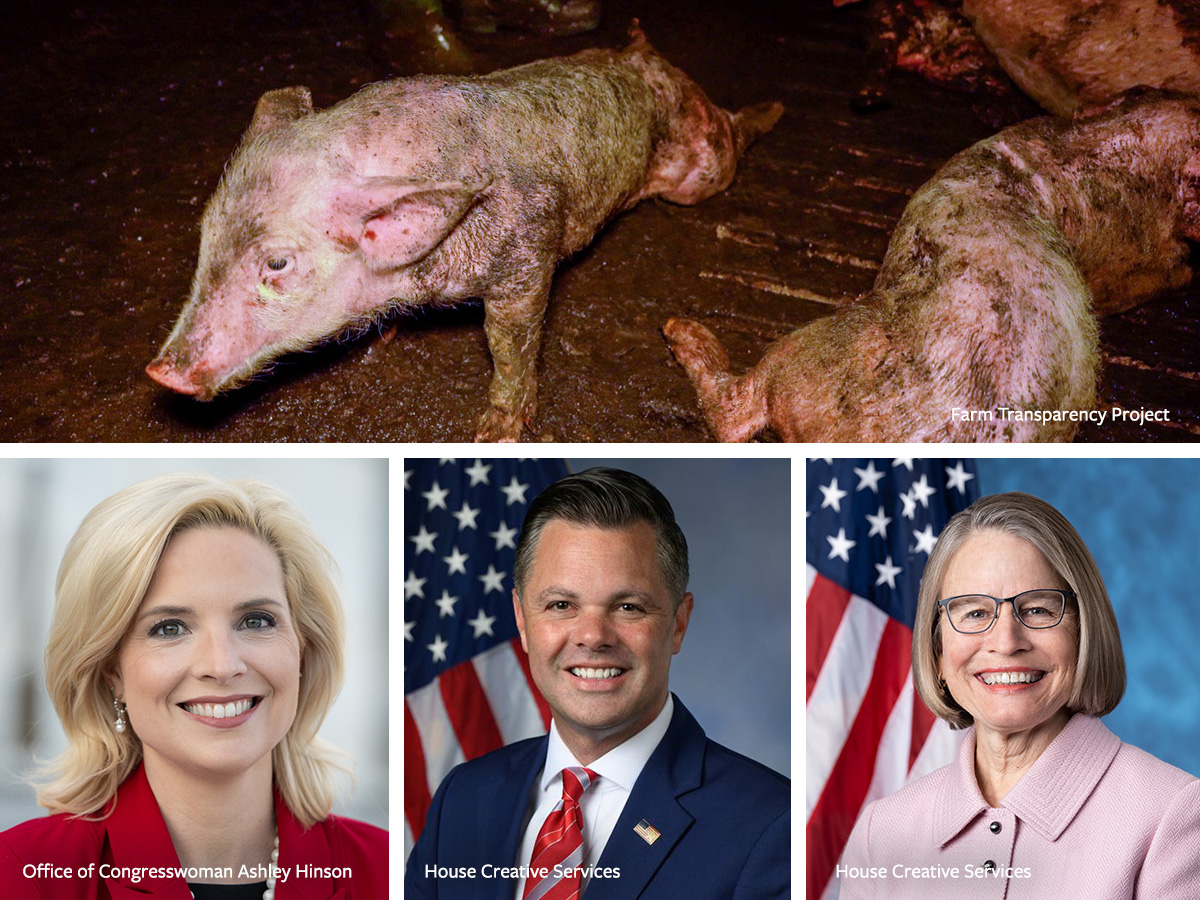
Three Iowa Republicans who backed legislation threatening protections for farmed animals will not return to Congress in 2027.
Rep. Ashley Hinson lost her campaign for an open U.S. Senate seat to Democrat Josh Turek after choosing not to seek reelection to the House. Reps. Mariannette Miller-Meeks and Zach Nunn also lost their reelection bids to Democrats Christina Bohannan and Sarah Trone Garriott, respectively.
On Aug. 10, 2021, Hinson introduced the original House Exposing Agricultural Trade Suppression (EATS) Act, H.R. 4999, with Miller-Meeks as an original cosponsor. The legislation sought to override state animal protection laws, including California's Proposition 12, which provides limited protections for mother pigs, calves, and egg-laying hens against extreme confinement. The EATS Act failed to pass, but similar proposals continued to threaten these safeguards.
On July 23, 2025, Hinson introduced the Save Our Bacon Act, H.R. 4673, with Miller-Meeks and Nunn serving as original cosponsors. The bill renewed efforts to undermine Proposition 12 and similar state laws by restricting states' authority to regulate agricultural products sold within their borders. Similar provisions were subsequently incorporated into the 2026 House Farm Bill, prompting In Defense of Animals to mobilize supporters against another attack on farmed animal protections.
Their departures remove three congressional supporters of legislation that threatened to undermine hard-won protections for farmed animals.
Jeff Crank, Colorado: Backing Threats to Wolves and Forests

Republican Rep. Jeff Crank lost his reelection bid to Democrat Jessica Killin.
Crank's defeat means a supporter of both measures will not return to the next Congress.
Five Wolf-Delisting Bill Cosponsors Lose Their House Seats
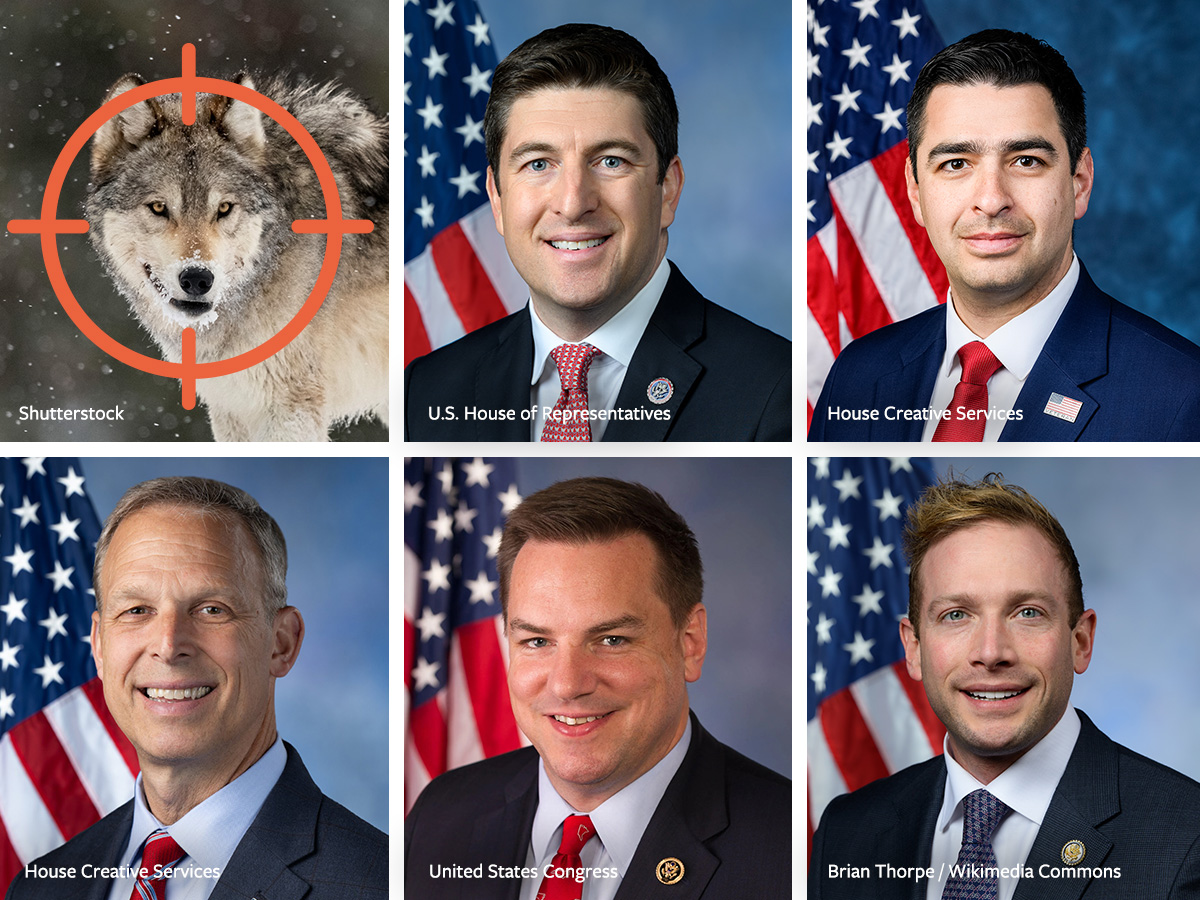
Five Republican representatives who cosponsored the Pet and Livestock Protection Act, H.R. 845, lost their reelection bids in the 2026 midterms.
Gabe Evans of Colorado was defeated by Democrat Manny Rutinel; Richard Hudson of North Carolina lost to Democrat Richard Ojeda; Scott Perry of Pennsylvania was defeated by Democrat Janelle Stelson; Bryan Steil of Wisconsin lost to Democrat Mitchell Berman; and Max Miller of Ohio was defeated by Democrat Brian Poindexter.
All five backed legislation that would force the removal of federal Endangered Species Act protections for gray wolves, leaving these animals vulnerable to expanded hunting and trapping. The bill would also prevent federal courts from reviewing the mandated delisting, eliminating an important avenue for challenging the removal of protections.
Their election defeats mean five additional cosponsors of the wolf-delisting legislation will not return to the next Congress.
David Valadao, Jennifer Kiggans, and Young Kim: Fix Our Forests Act Cosponsors Leaving Congress

Three original cosponsors of the Fix Our Forests Act will not return to the next Congress.
Republican Rep. David Valadao of California lost reelection to Democrat Randy Villegas, while Republican Rep. Jennifer Kiggans of Virginia was defeated by Democrat Elaine Luria. Republican Rep. Young Kim of California also backed the bill and lost her race in California’s redrawn 40th Congressional District to fellow Republican incumbent Ken Calvert.
With the departures of Valadao, Kiggans, and Kim, three original cosponsors of the legislation will no longer serve in the next Congress.
Rep. Virginia Foxx (R-N.C.): A Long Record of Voting Against Animals
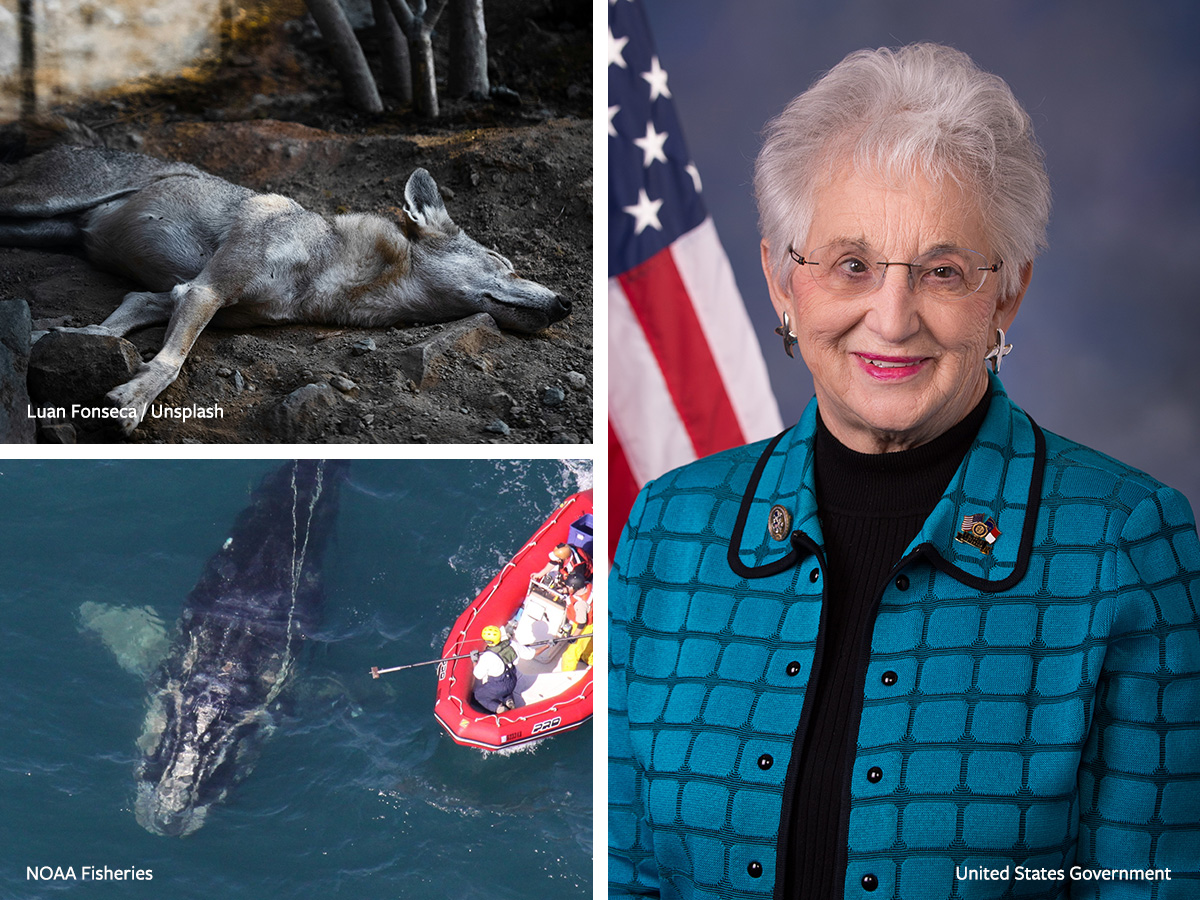
Rep. Virginia Foxx has repeatedly voted against animal protection measures, earning dismal scores from the Humane Society Legislative Fund, including 0% in 2020. Her record includes supporting legislation that would strip gray wolves of federal Endangered Species Act protections and voting to delay stronger safeguards for critically endangered North Atlantic right whales until 2035.
Her votes have consistently favored industries and political interests over the lives and well-being of vulnerable animals. Good riddance!
Texas Attorney General Ken Paxton: Failed Senate Bid Ends His Tenure in Office
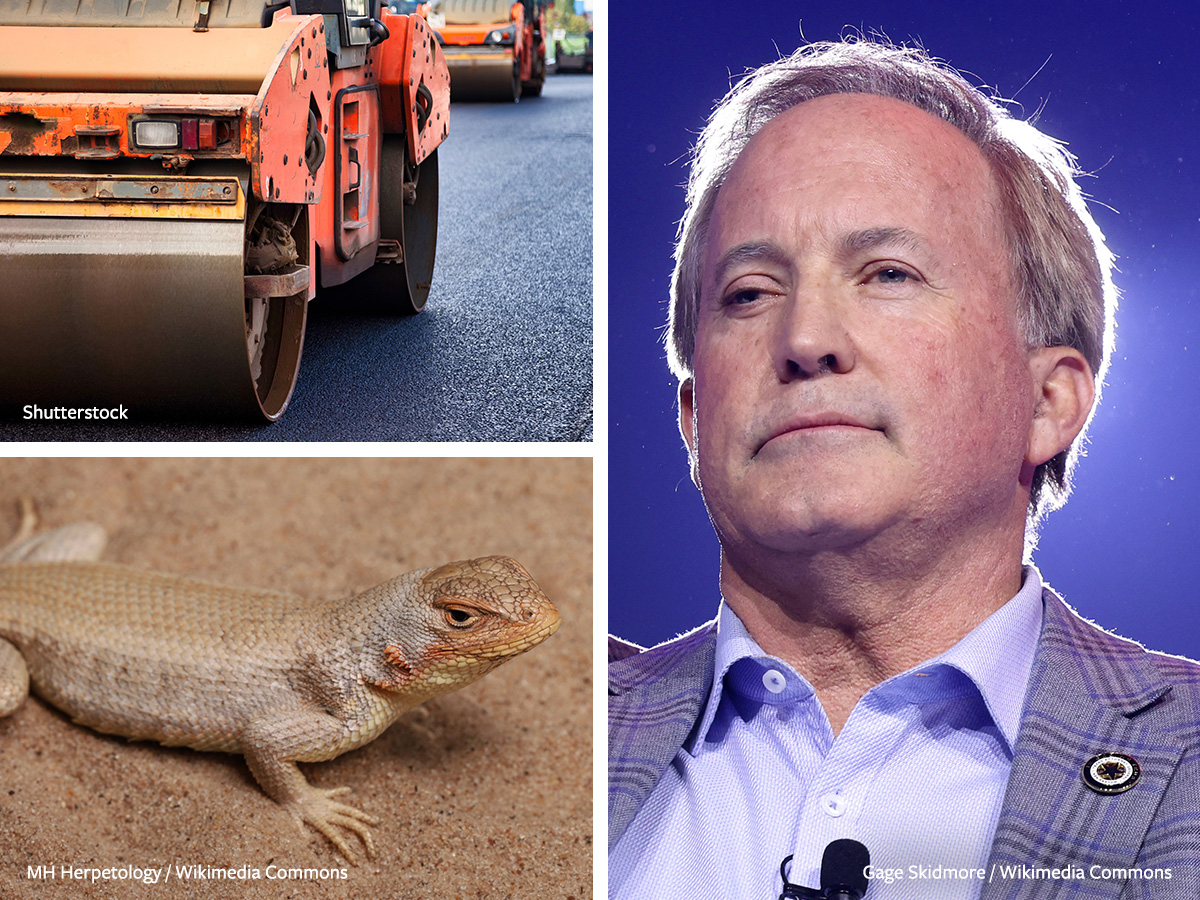
Texas Attorney General Ken Paxton lost his bid for the U.S. Senate to Democrat James Talarico, and his decision not to seek reelection as attorney general means he will also leave that office in January 2027.
During his tenure, Paxton repeatedly challenged federal protections for endangered wildlife, filing lawsuits against safeguards for lesser prairie chickens, dunes sagebrush lizards, and seven species of freshwater mussels.
In July 2026, a settlement in one of his lawsuits resulted in the removal of federal endangered species protections for the dunes sagebrush lizard, whose habitat is threatened by oil and gas development. Although Paxton was not directly voted out of his current office, his Senate defeat marks the end of his tenure as Texas attorney general.
Governors: Election Defeats and Animal Protection Records
Greg Abbott, Texas: Defeated After a Controversial Record on Animal Protection
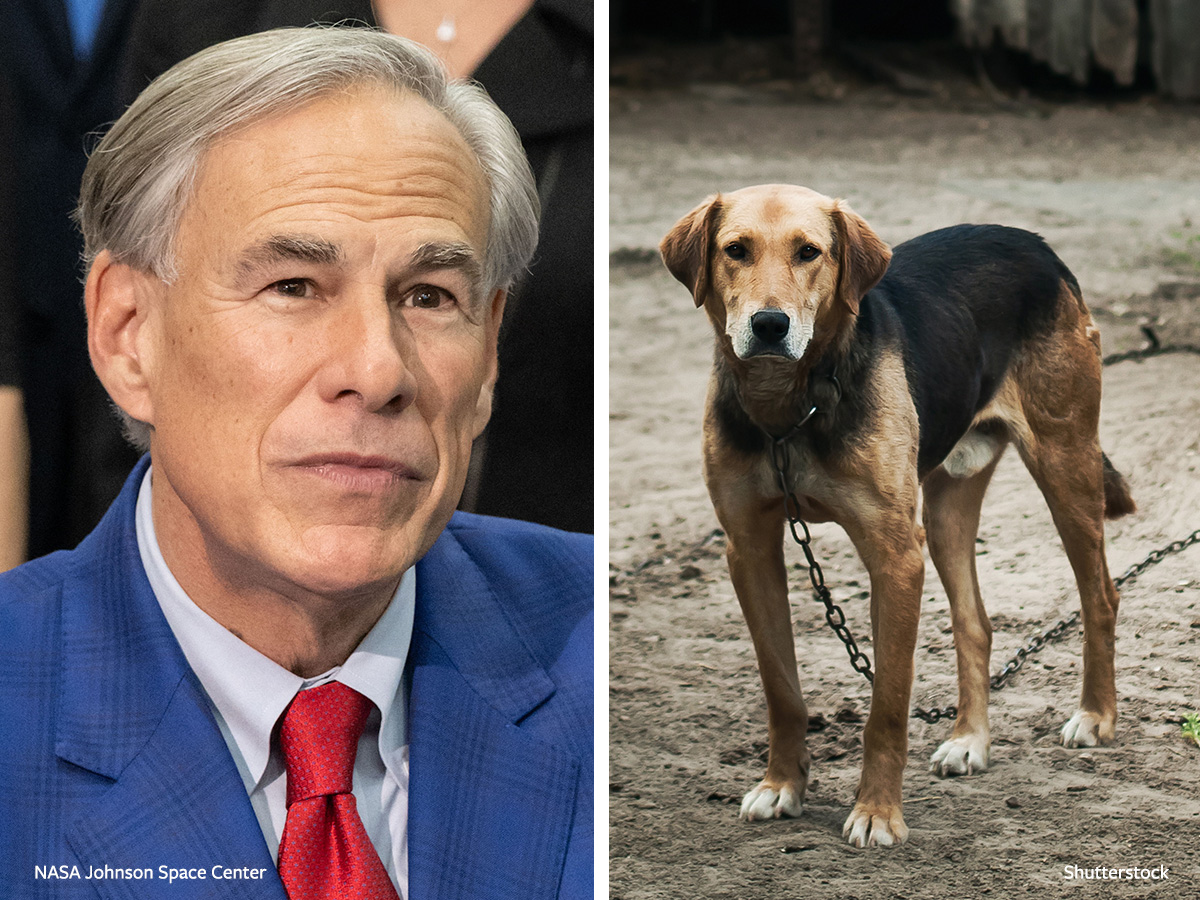
Republican Gov. Greg Abbott lost his reelection bid to Democrat Gina Hinojosa, ending his 11-year tenure as Texas governor. In 2021, Abbott drew widespread criticism from animal advocates after vetoing legislation intended to strengthen protections for dogs kept chained outdoors. Following public outrage, he signed a revised version of the Safe Outdoor Dogs Act, which established stronger standards for shelter, water, and restraints. In Defense of Animals documented both the initial setback and the eventual victory for dogs.
We hope the next governor of Texas does better for animals.
Animal Protection Must Remain a Priority Beyond Election Day
The departures of lawmakers who supported legislation threatening animals may change the prospects for some proposals, but election outcomes alone do not guarantee stronger protections.
Bills can continue moving through Congress before newly elected officials take office, and similar proposals can return in future sessions. Federal agencies can also pursue harmful policies independently of Congress.
Protecting animals is not a partisan issue. Republicans, Democrats, and independents all have a responsibility to safeguard animals from cruelty, exploitation, and habitat destruction.
Victories against foie gras are worth celebrating, but the meat, dairy, and egg industries are also built on the exploitation, torture, and killing of animals. Let’s celebrate every step forward while continuing to expose and challenge the inherent cruelty of all animal farming and exploitation and fight for the liberation of all animals.
In Defense of Animals will continue challenging harmful legislation, supporting meaningful protections, and holding lawmakers accountable, regardless of which party controls Congress. We are grateful to everyone who speaks up, signs and shares alerts, and helps defend animals whose lives depend on meaningful change.


