

UPDATE: Jersey Shore Man Who Beheaded Seagull Gets Only 8 Months Imprisonment
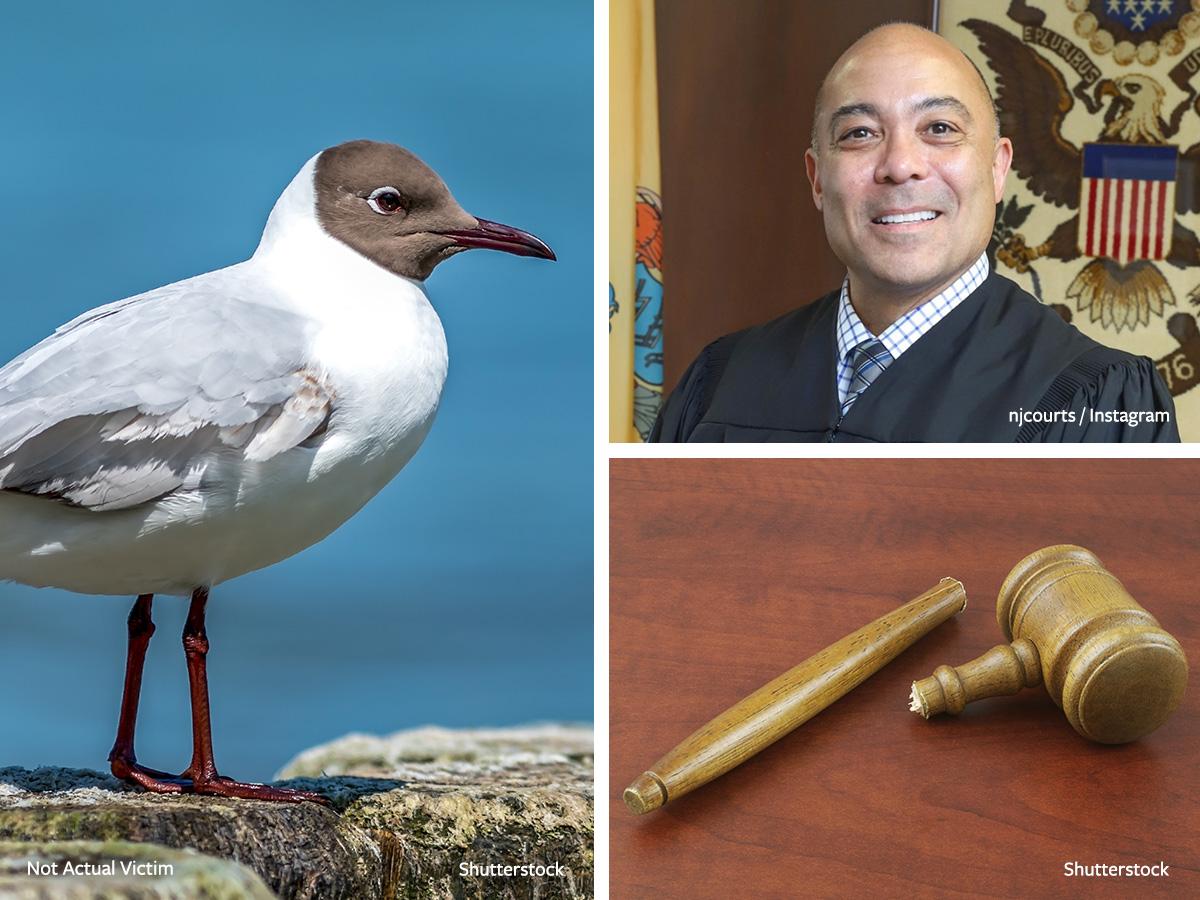
A man who publicly decapitated a seagull on the Jersey Shore has now been sentenced, and while the outcome is better than the disgraceful result in Atlantic County’s serial cat killing case, it is still nowhere close to real justice.
On March 12, 2026, Judge Jeffrey Wilson sentenced Zeigler to just 263 days in jail, plus five years of parole, and $155 in fees and fines for his brutality. He was released and credited with time served.
Franklin C. Zeigler, who killed a seagull in full view of horrified families and children in North Wildwood, received 263 days in jail with credit for time served and was admitted to recovery court instead of being sent to state prison.
Franklin C. Zeigler did not go to trial. He pleaded guilty to several charges, including third-degree animal cruelty. Public reporting indicates the case was resolved by plea, but does not fully spell out the exact terms of the plea agreement.
The killing happened on July 6, 2024, after the seagull tried to take a French fry from Zeigler’s daughter at Morey’s Piers. Witnesses watched as he ripped the bird’s head off in public. He then reportedly asked for a trash bag while holding the bird’s body. The brutality was shocking on its own. The fact that it happened in front of children made it even more disturbing.
Zeigler was charged with third-degree animal cruelty, a serious crime in New Jersey that carries a potential sentence of three to five years in prison. That stronger penalty matters because New Jersey law was already strengthened more than a decade ago. Patrick’s Law, signed in 2013, elevated the most serious animal cruelty offenses and gave prosecutors and courts stronger tools to pursue meaningful punishment when an animal is violently harmed or killed. Those stronger tools existed here. They simply were not used to their fullest extent.
That is what makes this case so frustrating. This was not a technical violation or a moment of neglect. This was a deliberate act of lethal violence committed in public, in front of children, over something as trivial as a French fry. And yet the sentence stopped at time served, fees, and recovery court. That isn’t nothing, but it is still a weak response to such shocking cruelty.
This sentence also stands in stark contrast to two other recent New Jersey animal cruelty cases.
In Monmouth County, Bani Mezquititla received the full five-year maximum sentence for torturing, sexually abusing, and killing one cat.
In Atlantic County, Edwin Sanabia, whose case involved allegations of torturing and killing 13 cats, plus other matters reportedly resolved in the same plea, including a knife incident involving a 16-year-old and a burglary case, received 364 days and probation and then walked free almost immediately because of time served. Against that backdrop, Franklin C. Zeigler’s sentence for killing one seagull is still far too light, but it is plainly a much stronger outcome than the Atlantic County case. When one cat brings the maximum, but 13 cats plus other violent conduct bring almost nothing, the inconsistency is impossible to ignore.
That comparison matters. It shows that New Jersey courts are not powerless. In the Bani case, the system used the law to impose the maximum available sentence. In the Sanabia case, the system failed catastrophically. In the Zeigler case, the result falls somewhere in between. It is better than immediate release. But for a brutal public killing charged as a third-degree crime, it is still a missed opportunity to send the message that violence against animals carries serious consequences.

The public safety concerns here are not abstract. Zeigler has also reportedly been charged in a separate case involving alleged violence against the mother of his daughter, including aggravated assault, false imprisonment, and criminal restraint. Cases like this are yet another reminder that cruelty to animals does not happen in a vacuum. It is often part of a larger pattern of violence, control, and danger.
We are deeply grateful to the 11,223 supporters who signed our letter calling for accountability in this case. Your voices helped make clear that this seagull’s life mattered, that children should not be exposed to this kind of brutality, and that wild animals are not disposable. Even when the outcome falls short, public pressure matters. It keeps these cases visible and reminds prosecutors, judges, and lawmakers that people are paying attention.

This case should also renew calls for stronger reform. Patrick’s Law gave New Jersey more power to punish extreme cruelty, but these cases show that stronger laws on paper do not automatically lead to strong outcomes in court. Until prosecutors and judges use those tools more forcefully, and until loopholes that allow severe cruelty to end in time served or weak plea outcomes are closed, animals will continue to be failed by the very system that is supposed to protect them.
Take Action: File a Complaint About This Sentence
Judicial decisions shape whether laws protect animals or fail them.
Judge Jeffrey Wilson had the authority to impose a sentence that reflected the brutality of this crime. Instead, the outcome allowed a man who publicly decapitated a seagull in front of families and children to avoid any meaningful prison time beyond the time already served.
You can take action by filing a complaint with the New Jersey Advisory Committee on Judicial Conduct.
File your complaint here using the official New Jersey judicial conduct form:
New Jersey Advisory Committee on Judicial Conduct Form
While this committee cannot change the sentence, it can review whether judicial conduct or decisions undermine public confidence in the courts, and your voice plays a critical role in that accountability.
Step-by-Step: How to Fill Out the Complaint Form
Follow this guide to make your complaint as effective as possible.
1. Your Name
Enter your full legal name.
2. Mailing Address
Enter your full address.
3. City, State, ZIP
Enter your city, state, and ZIP code.
4. Telephone Number
Provide the best number to reach you.
5. Name of Judge
Jeffrey Wilson
6. County/Municipality
Cape May County, New Jersey
(You may also write: Cape May County Superior Court)
7. Case Number
24000766
8. Attorneys Involved
You may write:
Cape May County Prosecutor’s Office
Contact information unknown
Or simply: Unknown
9. Witnesses
Write: None known
What to Write in Your Complaint
Keep your message factual, respectful, and focused on accountability.
You may use and personalize the following:
I am submitting this complaint regarding Judge Jeffrey Wilson in Cape May County, New Jersey, in connection with the sentencing of Franklin C. Zeigler, who pleaded guilty in a case involving the public killing of a seagull.
I am deeply concerned that a sentence of 263 days, resulting in release with credit for time served, failed to reflect the gravity of this brutal act. This killing took place in public and in front of horrified families and children. In a case involving such shocking cruelty, this outcome appears to undermine public confidence in the judicial system and suggests that severe violence against animals carries little meaningful consequence.
I understand that this committee cannot change the sentence. However, I am asking for a review of whether this outcome reflects conduct that damages public trust in the judiciary.
This case has caused widespread concern. Many believe the sentence failed to reflect the seriousness of the violence inflicted, the trauma to those who witnessed it, and the need for meaningful accountability. I respectfully request a thorough review of this matter.
You can also add a brief personal statement, such as:
This outcome shook my confidence in the justice system
Wild animals deserve meaningful protection under the law.
Accountability must reflect the severity of harm.
Children should not be exposed to such brutality without serious consequences.
Submit Your Complaint
Send your completed form to:
Advisory Committee on Judicial Conduct
P.O. Box 037
Trenton, NJ 08625-0037
Email: AOC-ACJCInfo.MBX@njcourts.gov
To learn more about how In Defense of Animals works every day to defend animals from cruelty, neglect, and exploitation, please explore our Justice for Animals campaign and the many ways we fight for accountability in cases like this. We are deeply grateful for every person who stands with us. If you are able, donations help make this advocacy possible and sustain our work to protect animals and push for stronger justice.


