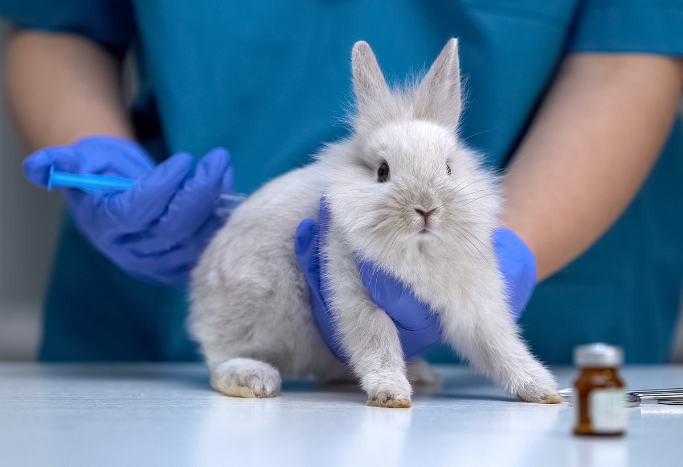

In Defense of Animals is fighting for a complete ban on animal testing.
Animal testing, originally called “vivisection,” was invented and popularized in the Victorian era. It was fashionable science at a time when many scientists did not recognize that animals can feel complex emotions. Sadly, animals endure torturous tests and suffer in secret in laboratories to this day. This is despite the many alternatives to animal testing and countless reasons to ban animal testing.
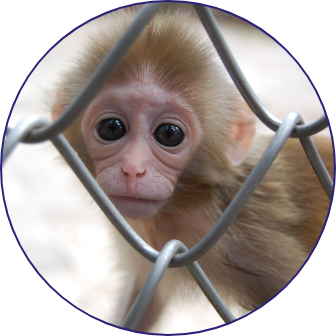
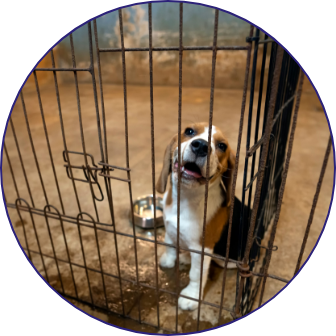
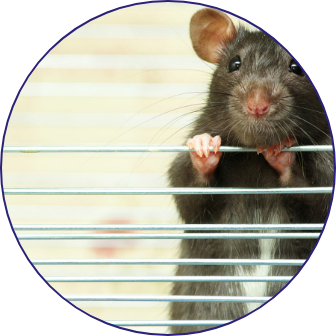
Video and photographic evidence consistently exposes our worst fears about what takes place behind closed doors. Terrified monkeys have their skulls sliced open while locked into restraints. Dogs and cats are strapped into harnesses while poison is pumped through their veins. Smaller animals like rats and mice, uncounted, yet numbering in the millions, are forced to endure overwhelming pain.
- Reasons To Ban Animal Testing
- How We Help Stop Vivisection
- Take Action against Vivisection
- Latest Vivisection News
Reasons To Ban Animal Testing
High profile scientists have spoken out to expose the flaws of animal experiments.
The history of cancer research has been the history of curing cancer in the mouse. We have cured mice of cancer for decades and it simply didn’t work in human beings.
— Dr. Richard Klausner, former director of the US National Cancer Institute
Animal Tests Are Flawed
Animal experiments are fatally flawed because each species reacts differently. It goes without saying that cats, dogs, and other animals are built differently than us. We don’t share our medications with our animal companions because they could harm or even kill them.
Similarly, drugs that seemed promising in animal tests have seriously harmed humans. Prescription drugs continue to be a leading cause of human death despite passing animal tests.
Animal Testing is Ineffective
Our bodies are different from other animals. This is why animal experiments overwhelmingly fail to produce the effective treatments we seek.
The National Institutes of Health indicates that approximately 95% of new drugs fail during research and development. Of all investigative medicines that show positive results in animal trials before entering human clinical trials, only 12% are ultimately approved.
Animal Testing is Inhumane
Animals in laboratories are trapped, forced to test new medications and vaccines. Mice, rats, cats, dogs, guinea pigs, primates, and other animals are exposed to test substances to determine lethal doses and side effects.
They may undergo agonizing, often life-threatening procedures without painkillers. They may be starved, drowned, intentionally addicted to drugs, burned, and infected with diseases. Some animals are bred with genetic modifications to express specific diseases or traits, which may result in tumors, psychological disorders, blindness, and more.
When the torture is complete, the animals used are mercilessly killed once testing concludes, often by suffocation, decapitation, or neck-breaking.
What is Cosmetics Testing?
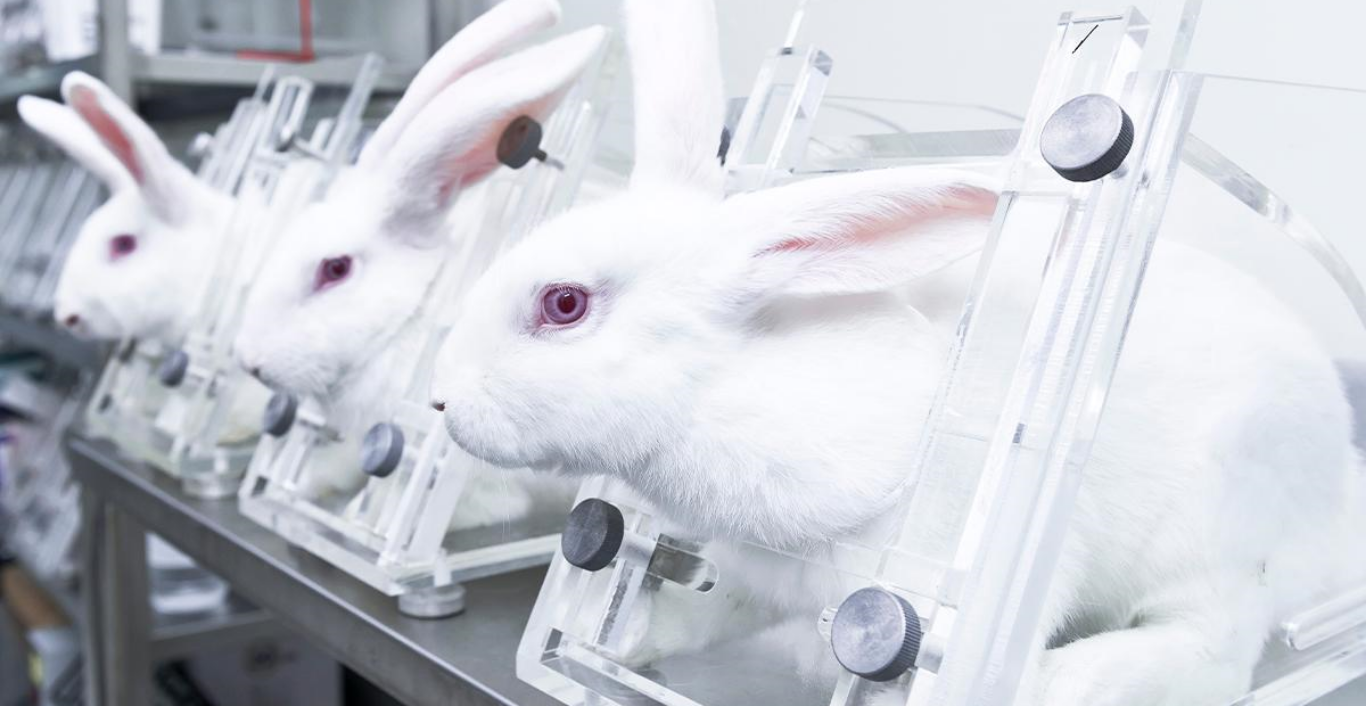
Cosmetics animal tests include outdated, scientifically unreliable methods of determining the safety of a product. For these tests, innocent animals, including rabbits, mice, rats, hamsters, and guinea pigs, are confined, restrained, and exposed to finished cosmetic products or ingredients included in a product’s formula.
Testing on animals for cosmetics may include:
- Dripping chemicals into animals’ eyes or rubbing chemicals onto their shaved skin to observe the results, which may include burns, lesions, bleeding, ulcers, and loss of vision.
- Forcing animals to inhale test substances.
- Force-feeding animals to ingest test substances over prolonged periods of time to observe the effects, which may range from general illness to cancer, seizures, birth defects, death, or anything in between.
- "Lethal dose" tests in which animals are forced to consume large amounts of a test substance to determine the dose that kills them.
Animal Testing is Wasteful
Billions of taxpayer dollars are squandered every year on animal experiments that do not work. While the National Institutes of Health (NIH) does not report specifically, expert analysis suggests that around half of its annual budget, approximately $20 billion in taxpayer dollars fund animal experiments each year. A significant portion of which covers "indirect costs" for university administration and facility construction rather than actual scientific discovery. This outdated funding system prioritizes expensive, decades-old animal models over efficient modern technology.
Modern Science Doesn't Use Animals
Fortunately, science is heading toward a more humane future. Superior non-animal methods are already available and rapidly advancing, endorsed by landmark legislation like the FDA Modernization Act 2.0 which authorizes their use in place of animal testing.
Modern science now utilizes human-based technologies like AI-enabled cell research, organoids, and "organ-on-a-chip" systems, which mimic human biology with far greater accuracy than animal models.
These innovative alternatives are proving to be drastically faster and cheaper; for example, a recent Moderna study found that organ-chip testing allowed them to screen drug candidates in just 18 months for $325,000, compared to the 60 months and $5 million required for primate testing.
However, a whole industry is built on animal experiments. Vested interests such as animal breeders, equipment manufacturers, and institutions reliant on government grants are desperate for it to continue. It is up to us to lobby for modern science to be implemented.
How We Help Stop Vivisection
In Defense of Animals was born from a refusal to stay silent. In 1983, our founder, Dr. Elliot Katz, exposed a "veterinarian's nightmare" at UC Berkeley. Animals were dying by the hundreds in filthy, grossly overcrowded facilities from heatstroke, complications following surgery, gangrene, bacterial meningoencephalitis and viral epidemics. Campus veterinarians were unable to perform their jobs, and in some instances, were even locked out of laboratories where animals in need were sick and dying.
Dr. Katz mobilized concerned citizens to sue the USDA, forcing the agency to issue a cease-and-desist order and fine the university $12,000 for violating the Animal Welfare Act. It proved no lab is above the law and set a precedent that changed animal protection history.
Shutting Down Cruelty
We do not just expose labs; we close them. From our historic 22-year battle to liberate chimpanzees to our current fight in Oregon, our strategy is defined by tenacious, long-term campaigning that gets results.
- Closing the Coulston Foundation: In the 1990s, we exposed the Coulston Foundation, the world’s largest chimpanzee laboratory, for its negligence and abuse. Our formal complaints led to unprecedented USDA charges, and by 2002, we achieved total victory: the lab was shut down, and 300 survivors were retired to sanctuaries to live out their lives in peace.
- Ending Federal Chimanzee Research: IDA then launched a five-year legal battle to expose the horrors of National Institutes of Health (NIH) chimpanzee experiments. Our evidence fueled a groundbreaking investigation that shifted public policy. In 2015, following years of pressure, the NIH finally announced the end its chimpanzee research program, effectively ending the era of federally funded chimp testing in the U.S.
- Challenging OHSU: Our undercover investigation in 2000 exposed the severe psychological distress of monkeys at the Oregon National Primate Research Center, drawing condemnation from experts including Dr. Jane Goodall. We forced transparency on public records through our precedent-setting legal victory in In Defense of Animals v. OHSU in 2005, establishing that public bodies cannot use high costs to shield themselves from public scrutiny. This paved the way for a proposed historic transition to turn this laboratory into a sanctuary.
Championing modern science. We have investigated labs, shut them down, got animals retired to sanctuaries and prevented new animal research facilities from being built. But closing labs is only half the battle. To end vivisection permanently, we must dismantle the system that supports it. We push back against the vested interests of the animal research complex and lobby for the adoption of human-relevant, non-animal research.
Here's how we do it:
- Empower advocates to push for new laws like the FDA Modernization Act 2.0 and Humane Cosmetics Act, which would eliminate cruel and ineffective testing and would also ban the sale of animal-tested cosmetics throughout the United States.
- Produce Cruelty-Free Shopping Guides, making it easier than ever for consumers to make ethical choices.
- Campaign against the mass killing of animals in university labs.
- Support and promote World Week for Animals In Laboratories #United4AnimalsinLabs
What You Can Do
Whether you are concerned about animal suffering, your own health, or both, we must embrace human-focused science and stop wasting money and scientific talent on outdated and barbaric animal experiments.
- Always shop cruelty-free, where possible
- Sign one of our active alerts to stop vivisection
- Read our latest news to stay up-to-date on this topic
- Donate to end animal experiments
1 million
animals are killed every year in labs in the USA. This number excludes mice, rats, birds, reptiles and amphibians.
Rats and mice are used in the majority of animal experiments in the USA, however the true numbers are shrouded in secrecy.
It is estimated that between 11 and 100 million rats and mice are used every year in animal testing.